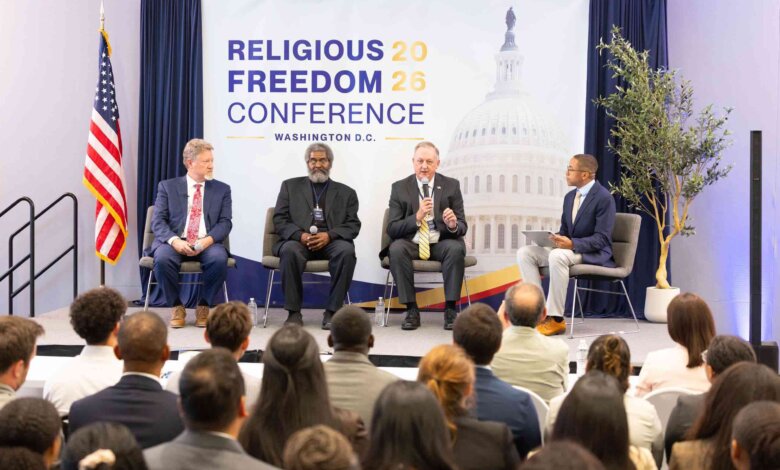
Religious freedom advocates, faith leaders, political voices and community members gathered at the University of the District of Columbia for the Religious Freedom Conference 2026 examining religious persecution and its implications for human rights and civil liberties.
Held at the University of the District of Colombia Student Center in Northwest Washington, D.C., the Religious Freedom Conference gave members of the Washington-area community an opportunity to hear from speakers working across public policy, media, advocacy and interfaith engagement.
Organizers, New Heaven New Earth Church also known as Shincheonji Church of Jesus, encouraged attendees, advocates and journalists to learn more about reported cases of religious persecution and to examine the legal and government processes affecting individuals and communities whose beliefs have placed them at risk.
The conference sought to encourage constructive dialogue across political and religious lines while connecting members of the Washington-area community with advocates working to defend freedom of religion or belief.
Through individual remarks and a moderated panel discussion, speakers addressed challenges faced by people whose faith, religious identity or expression has placed them at risk. Topics included religion-motivated detention, censorship, suppression of religious expression and other restrictions on the ability of individuals and communities to practice and share their beliefs freely.
Featured speakers included Greg Mitchell, founder and CEO of the International Religious Freedom Secretariat and founding/managing co-chair of the International Religious Freedom Roundtable, Dave Beckwith, 2026 Republican candidate for the U.S. House of Representatives in Virginia’s 10th Congressional District, and Imam Michael Abdul-Hakim, an Islamic community leader.
Mitchell emphasized that freedom of religion or belief is a fundamental right and called for sustained engagement by governments, civil-society organizations and religious communities in addressing religious freedom violations worldwide. He shared his experience working for religious freedom, saying:
“The Pew Research Center started doing research on restrictions on religion, global restrictions on religion, and social hostilities involving religion. And the first report they did found that close to 70% of the world’s population was living in cities with high or very high levels of restrictions on religion and high social hostilities to go along with those restrictions. So a certain group of people in Washington D.C. got together and figured we need to do something about it because it was a growing problem, and the subsequent Pew Research Center reports showed that it’s continuing to grow, and they’ve been raising restrictions on religion globally, and social hostilities.”
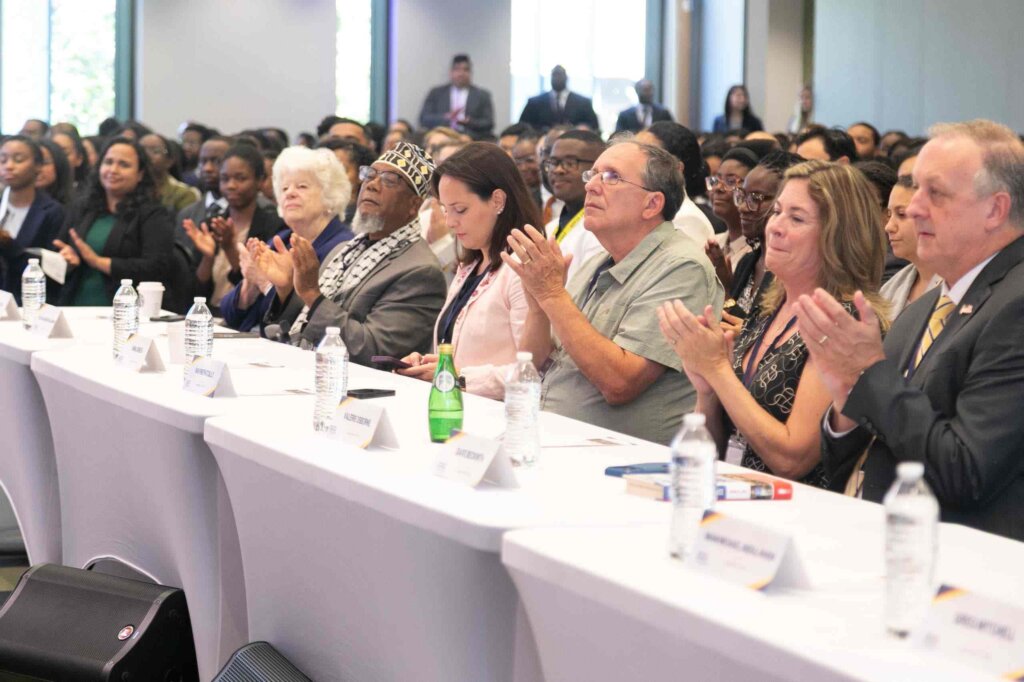
Beckwith discussed prioritizing religious freedom in relation to constitutional protections and broader individual liberties. He also addressed the role elected officials and policymakers can play in reviewing government actions, responding to alleged abuses, and protecting the rights of law-abiding citizens.
Regarding Lee Man-hee, also known as Chairman Lee’s situation happening in South Korea, Beckwith shared, saying:
“I was sitting with DeAnthony and Jalen, and they talked about Chairman Lee, and I heard a little bit of the story, and I said, if I get elected, I’m going to go to South Korea and try and meet with him and shine a light on his situation. I’m here for the principle of religious freedom. My religion is not his religion, but our religions require the same attention and freedom.”
Jenkins and Imam Abdul-Hakim contributed perspectives from the media, civic and faith communities. Their participation reflected the conference’s effort to bring different sectors of the Washington region into a shared discussion about religious freedom and human dignity.
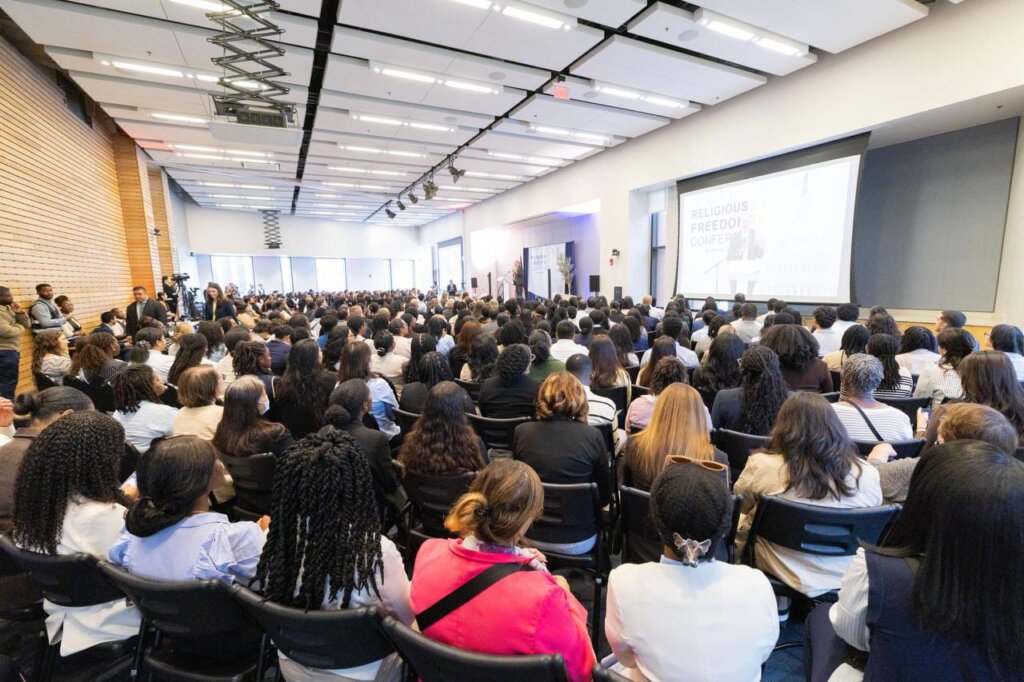
The program also examined how restrictions on religion can overlap with limitations on freedom of expression, freedom of association and due process. Speakers discussed practical ways that faith communities, journalists, civic leaders and human-rights advocates can increase public awareness and support people targeted because of their beliefs.
For attendees, the conference offered a local forum for connecting international religious-freedom concerns with conversations taking place in Washington about civil liberties, government accountability and the protection of minority communities.
Imam Abdul-Hakim described the conference as an important opportunity to bring affected communities and public-policy voices into the same conversation about religion and justice.
He shared, saying: “Where there is no justice, you will not find peace. No balance, and I’m saying it this way so you think.”
The event concluded with a call for continued attention to individuals facing religious persecution in Asia and other regions, as well as greater awareness of cases involving censorship, detention and restrictions on religious practice.
Source: Religious Freedom Conference