The crisis in second-cycle schools
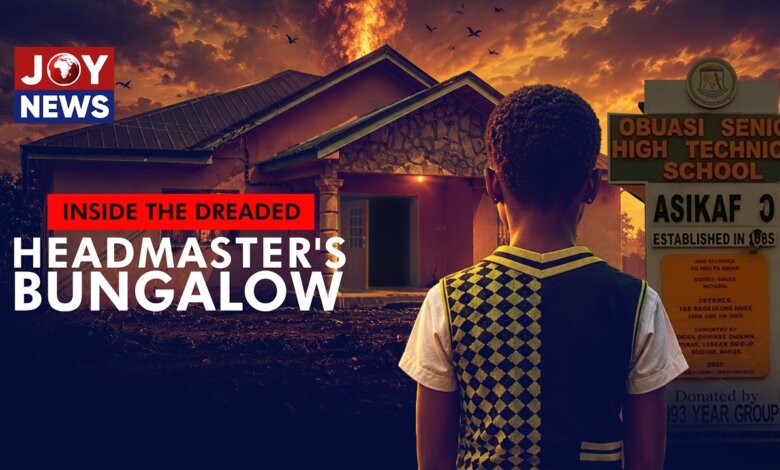
In the noble ecosystem of our second-cycle educational institutions, a spectacular new curriculum has quietly taken root. It does not appear on the official syllabus, nor will you find it discussed at Parent-Teacher Association (PTA) meetings, yet it is practiced with the kind of rigorous efficiency that would make any modern bureaucrat weep with joy. It is the delicate, fine-tuned art of the “Deliberate Blind Look.“
To understand this advanced administrative technique, one must first appreciate the heavy burden carried by certain grown-ups. These are the distinguished gentlemen entrusted with the unique, critical responsibility of mentoring and protecting our vulnerable young girls. It is an exhausting job, really.
And how are these selfless guardians rewarded? With the ultimate modern superpower: political immunity. When a well-connected official decides to cross every boundary of human decency, morality, and law, they do not do so blindly.
No, they do so with the comforting knowledge that a powerful political network functions exactly like a premium noise-cancelling headphone. It drowns out the screams, silences the rumours and turns a catastrophic criminal act into nothing more than a minor administrative hiccup.
In this upside-down world, a political connection is the ultimate get-out-of-jail-free card, ensuring that the perpetrators can sleep soundly at night, completely unpunished, while the children under their care are left to pick up the shattered pieces of their lives. But the real magic happens in the headmaster’s office and the regional directorates.
When an incident of defilement or abuse inevitably leaks out, the institutional machinery springs into action with breathtaking hypocrisy. The strategy is brilliant in its simplicity: instead of investigating the perpetrator, the authorities immediately investigate the audacity of those who noticed.
If a student dares to cry out for justice, or if a teacher commits the ultimate professional sin of showing genuine disgust and trying to protect a child, the system knows exactly what to do. The moral compass of the institution is swiftly inverted. The whistleblowers, the protectors and the outraged onlookers become the real threat to public order.
They are reprimanded, transferred or systematically punished for “breaching protocol” or “tarnishing the school’s hard-earned reputation.” After all, a ruined life is a private tragedy, but a ruined school reputation? That affects the next funding cycle and the headmaster’s chances at a national award.
Enter the final line of defense against this bureaucratic tranquility: the watchful, irritatingly persistent media. When a rogue journalist like Manasseh Azure Awuni turns his investigative spotlight onto these dark corridors, the noise-canceling headphones of the elite begin to crackle with static. An exposé drops, laying bare the grotesque mechanics of the cover-up in high-definition detail.
Suddenly, the “Deliberate Blind Look” is forced into a sudden, temporary blink. The initial institutional reflex to a media exposé is a masterclass in performative panic: the immediate deployment of PR firms, the drafting of heavily worded press releases promising “full investigations,” and the sudden, frantic reshuffling of position papers to prove that the system does, in fact, care.
Yet, even as the cameras roll and the public expressions of shock reach a crescendo, the deep-seated network quietly pivots, waiting for the news cycle to shift so the premium noise-canceling headphones can be turned back on.
This carefully engineered silence is further complicated by the reaction of the parents—a group trapped in a heartbreaking paradox of aspiration and terror.
For the average Ghanaian parent, securing a spot for a daughter in a prestigious second-cycle institution is a monumental sacrifice, won through years of school fees, prayers, and societal expectation. When the whispers of abuse reach them, the institutional machinery relies heavily on this heavy psychological leverage.
Parents are quietly reminded of the “greater good” and the devastating collateral damage that a public scandal would inflict on their daughter’s future academic prospects. They are forced into a cruel calculus, weighing the pursuit of justice against the immediate threat of institutional excommunication.
Many are coerced into a desperate, agonising silence, choosing to withdraw their shattered children in quiet shame rather than face a weaponised system that treats the victim as the ultimate hazard to the school’s brand value.
But beneath the high-level PR manoeuvres and the forced silences lies the most devastating, unseen casualty of this flawless system: the profound psychological toll inflicted upon the affected students.
For these young minds, the educational environment transforms overnight from a sanctuary of learning into a space of severe alienation. The initial trauma of abuse is compounded by the institutional betrayal that follows, creating a deep sense of disillusionment.
When reports are minimised or treated as bureaucratic inconveniences, students are forced to absorb a damaging message regarding their place within society. The institutional silence conveys that systemic reputation takes precedence over individual well-being and justice.
Consequently, affected individuals are left to navigate complex emotional challenges, including chronic anxiety, hypervigilance, and academic disruption. The absence of validation and support breeds isolation, complicating the recovery process and shifting the burden of distress onto the victims rather than the responsible parties.
This systemic abandonment erodes long-term trust in institutional authority and protective frameworks, often impacting the individual’s sense of security and self-worth well into adulthood. While administrative leadership focuses on maintaining operational normalcy, the victims face an enduring process of personal rebuilding.
Thus, the grand tradition continues, perfectly balanced between institutional denial, parental coercion, temporary media damage control, and the silent suffering of the vulnerable.
The individuals seeking justice are silenced, the righteous are penalised, and the politically insulated perpetrators are left to roam the corridors of our schools, entirely untouchable. It is a flawless system—provided, of course, you completely remove human conscience from the equation.
Author
Mr Emmanuel Amponsah is the former Editor of The Spectator paper in Ghana