Senegal hosts Africa’s first Olympic event with Dakar 2026
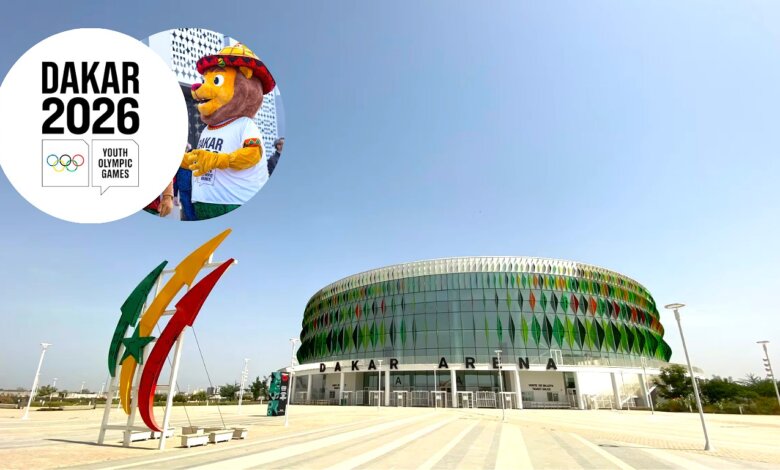
Senegal has become the first African country to host an Olympic sporting event following the official opening of the 2026 Summer Youth Olympic Games in Dakar, marking a historic milestone for the continent and the international Olympic Games.
The historic competition, officially known as Dakar 2026, commenced with an opening ceremony at the Stade Abdoulaye Wade in Diamniadio on Saturday, October 31, bringing together athletes, sporting officials, government representatives and international visitors.
Running until November 13, the competition is expected to attract approximately 2,655 athletes aged between 14 and 17, representing 204 National Olympic Committees, alongside the Refugee Olympic Team.
The event is being organised across three host locations: Dakar, Diamniadio and Saly, with competitions cutting across 25 sports and 153 medal events. An additional 10 engagement sports are included in the programme to encourage wider youth participation and exposure to different sporting disciplines.
The International Olympic Committee (IOC) describes the occasion as the first time an Olympic sporting event has been held on African soil, despite the continent’s longstanding contribution to international athletics and other Olympic disciplines.
The Senegalese government committed approximately 36 billion CFA francs, equivalent to around $60 million, to organising the Games and renovating sporting facilities. Of that amount, approximately 11.3 billion CFA francs, or $19 million, has been allocated to sports venue renovations.
The opening ceremony transformed the Stade Abdoulaye Wade into a display of Senegalese heritage which combined traditional dance, contemporary music, visual arts and theatrical presentations to celebrate the continent’s history, cultural diversity and aspirations for younger generations.
According to the IOC, the ceremony featured 1,115 performers, including 628 dancers. Approximately 1,500 costumes were produced locally, involving around 100 craftspeople and creative professionals.
The performances included appearances by Senegalese musicians Baaba Maal, Kiné Lam and Daara J Family, alongside Nigerian slamming artist IB Quake and Gambian kora musician Sona Jobarteh. Senegalese-born international social media personality Khaby Lame also featured in a live-painting presentation by artist Boubou Design.
The production centred on three symbolic characters, Alkebulan, Keb and Sitoé, representing connections between Africa’s past, present and future. The ceremony also incorporated a tribute to Africa’s 54 countries, emphasising shared cultural heritage and continental identity.
International Olympic Committee President Kirsty Coventry addressed the gathering, describing the occasion as a source of pride for Africa. The former Olympic swimming champion from Zimbabwe, made history in June 2025 when she became the first African and first woman elected president of the IOC.
Addressing spectators and athletes in Dakar, she said: “This is the Africa that I am so proud and so excited for the world to experience.”
Senegalese President Bassirou Diomaye Faye officially declared the Games open, after which the Youth Olympic flame completed its journey across the country with the lighting of the cauldron.
Dakar 2026 is the fourth edition of the Summer Youth Olympic Games, following previous editions in Singapore in 2010, Nanjing in 2014 and Buenos Aires in 2018. The competition was originally scheduled for 2022 but was postponed to 2026 following the COVID-19 pandemic.
The sporting programme features 25 competition sports, including athletics, swimming, basketball 3×3, football-related futsal, rugby sevens, boxing, judo, badminton, table tennis, gymnastics, cycling, sailing, skateboarding, breaking, fencing, taekwondo and beach volleyball.
Other disciplines include equestrian jumping, archery, baseball5, coastal rowing, beach handball, beach wrestling, triathlon and wushu. The 10 engagement sports, which provide opportunities beyond the medal competition, include surfing, tennis, golf, sport climbing, karate, hockey, canoe, modern pentathlon, shooting and weightlifting.
One of the notable features of this edition is its commitment to gender equality. According to the IOC, Dakar 2026 is the first Youth Olympic Games to achieve full gender parity across athlete quota places, sports, disciplines and events.
The programme provides equal representation for male and female athletes, with 73 medal events for each, alongside seven mixed events. Another historic inclusion is the participation of a Refugee Olympic Team in the Youth Olympic Games for the first time.
Six athletes based in Africa are representing displaced communities, bringing further attention to the role of sport in promoting inclusion and international solidarity.
The Games are being held across Dakar, Diamniadio and Saly, with eight competition venues and a separate festival site. Dakar hosts competitions at the Tour de l’Œuf Complex, Stade Iba Mar Diop and Corniche West.
Diamniadio, located approximately 30 kilometres east of Dakar, accommodates competitions at the Dakar Arena, Abdoulaye Wade Stadium, Dakar Expo Centre and the Equestrian Centre. It also houses the Youth Olympic Village.
Saly, approximately 80 kilometres south of Dakar, is hosting beach-based and coastal competitions, including beach volleyball, beach handball, beach wrestling, sailing, coastal rowing and triathlon.
The IOC says 11 local sports facilities, alongside the Complexe Iba Mar Diop and Complexe Tour de l’Œuf, have undergone renovation and modernisation to support sporting activities and community use beyond the Games.
The Youth Olympic Village is located on the campus of Amadou Mahtar Mbow University in Diamniadio. The facility is expected to return to student accommodation use after the competition. The infrastructure programme is part of a broader effort to ensure that hosting the Games produces benefits beyond the two-week sporting calendar.
Senegal’s hosting of the Youth Olympic Games represents a significant development in Africa’s relationship with the international sporting community. Although African countries have produced numerous Olympic champions and hosted major continental and international competitions, the continent has never hosted the full Summer Olympic Games.
Dakar 2026 therefore provides an opportunity to demonstrate Africa’s capacity to organise an Olympic event and manage the logistical, technical and administrative requirements associated with international sporting competitions.
Reuters reported ahead of the Games that Durban had been named South Africa’s candidate to pursue a possible bid for the 2036 or 2040 Summer Olympic Games.
The IOC has also highlighted the broader investment in African youth development, reporting that its Olympic Solidarity programmes allocated $19.5 million to youth development initiatives for the 2025–2028 period.
Since 2025, 149 initiatives across 53 African National Olympic Committees and 21 sports have received support, reaching more than 3,300 young athletes and 550 coaches. Thirteen athletes competing at Dakar 2026 are also among recipients of Olympic Solidarity scholarships supporting athletes preparing for the Los Angeles 2028 Olympic Games.
Written by Abeeb Lekan Sodiq for TheAfricanDream®