
Keisha Bottoms becomes first Black woman elected U.S. Governor
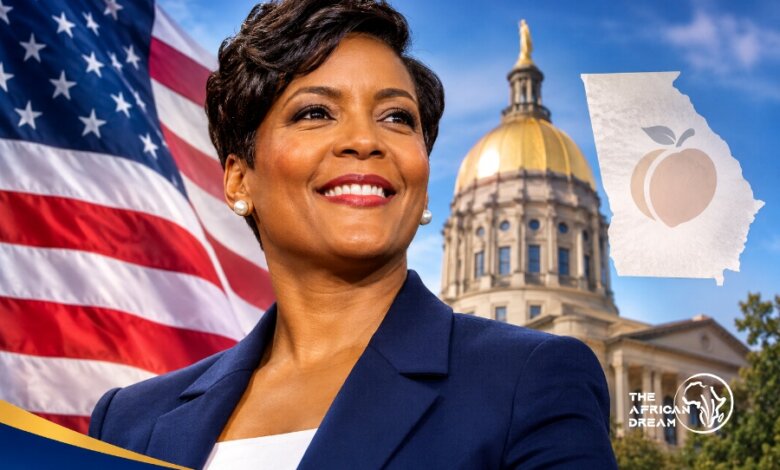
Keisha Lance Bottoms has made history after winning the 2026 Georgia gubernatorial election, becoming the first Black woman ever elected governor of a US state. Bottoms, the Democratic candidate and former mayor of Atlanta, defeated Republican businessman Rick Jackson in the November 3 election, ending more than two decades of Republican control of Georgia’s governorship.
Her victory represents a significant milestone in American political history, breaking a longstanding racial and gender barrier in the country’s state leadership. According to election reports, Bottoms’ victory makes Georgia the first US state to elect a Black woman to its highest executive office. She will also become the state’s first female governor and its first Black governor.
The historic achievement comes against the backdrop of a political landscape in which Black Americans have gradually secured greater representation in positions of national and state leadership, although significant barriers remain.
Before Bottoms’ election, only three Black Americans had been elected governor of a US state: L. Douglas Wilder of Virginia in 1989, Deval Patrick of Massachusetts in 2006, and Wes Moore of Maryland in 2022.
Bottoms’ victory adds a historic dimension to that progression, particularly for Black women who have remained underrepresented in the highest levels of American political leadership. Born and raised in Atlanta, Georgia, Bottoms built her political career through local government before gaining national recognition.
She served as the 60th mayor of Atlanta from 2018 to 2022, becoming one of the prominent Democratic political figures in the state. Her tenure coincided with several major challenges, including the COVID-19 pandemic, protests following the killing of George Floyd and a ransomware attack on Atlanta’s municipal government.
During her time as mayor, Bottoms gained national attention for her leadership and public interventions on issues of racial justice and public safety. Following her mayoral tenure, she joined the administration of former US President Joe Biden as a senior adviser, serving in the White House Office of Public Engagement.
Her gubernatorial campaign focused on issues affecting ordinary Georgians, including healthcare access, education, the cost of living and economic opportunities. Among her campaign proposals were expanding Medicaid access and strengthening access to public pre-kindergarten education.
For generations, Black women have played important roles in political organising, civil rights advocacy, community development and public administration in the United States. However, their representation at the highest levels of executive government has remained limited.
Bottoms’ achievement therefore represents the gradual expansion of opportunities for Black women to occupy positions of significant political authority and influence public policy.
Her election follows the unsuccessful gubernatorial campaigns of Stacey Abrams, who sought to become Georgia’s first Black woman governor in 2018 and 2022. Those campaigns brought national attention to the challenges and possibilities of Black women’s participation in American electoral politics.
The development is particularly noteworthy in Georgia, a state with a deeply significant history in America’s racial past, including slavery, segregation and the civil rights movement.
While the historic nature of Bottoms’ election has attracted considerable attention, her administration will ultimately be judged by its ability to translate campaign promises into tangible outcomes for Georgia residents.
Her victory also signals a political shift in a state where Republicans have maintained a stronghold on the governorship for more than two decades. Governing will require working through political divisions and a legislature where Republicans retain significant influence.
Written by Abeeb Lekan Sodiq for TheAfricanDream®