South African jurist Navi Pillay wins 2026 Nobel Peace Prize
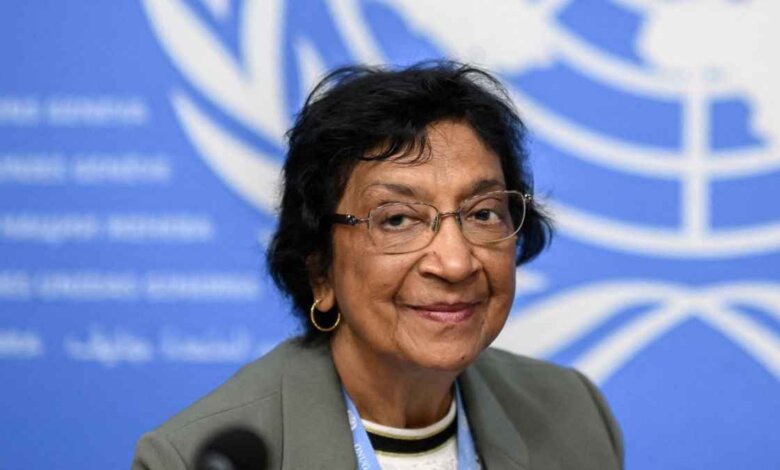
South African jurist Navanethem “Navi” Pillay has been awarded the 2026 Nobel Peace Prize for her efforts to promote peace and international law, as the Norwegian Nobel Committee warns that the international legal order is facing growing pressure.
Announcing the award on October 9, the Committee recognised Pillay’s longstanding commitment to universal legal principles and her contributions to strengthening international structures for prosecuting war crimes, crimes against humanity and genocide.
The Committee described Pillay as a figure whose courage, integrity and legal expertise have helped advance a more comprehensive international legal order. It also highlighted the importance of independent judicial institutions at a time when international law and the bodies responsible for upholding it face mounting challenges.
“The rule of law, national and international, underpins the system we have set up to ensure peace and resolve conflicts non-violently,” the Committee said in its announcement.
It added that “peace requires justice,” emphasising that accountability and respect for legal frameworks remain essential to peaceful coexistence among nations.
Born in Durban, South Africa, in 1941 to a family of Indian Tamil origin, Pillay grew up under apartheid, a system of racial segregation and discrimination that shaped much of the country’s political and social life.
Her legal career began with a commitment to challenging discrimination and defending those who opposed the apartheid system. In 1967, she established her own law firm in South Africa, becoming a pioneer for women in the legal profession.
Her early work included defending anti-apartheid activists, including Nelson Mandela and others who challenged the country’s racial order.
Pillay subsequently became one of the most prominent African jurists on the international stage, holding positions in several institutions responsible for addressing human rights violations and serious international crimes.
In 1995, she was appointed to South Africa’s High Court. Four years later, she became a judge at the International Criminal Tribunal for Rwanda, eventually serving as its president.
Her work at the tribunal contributed to landmark developments in international criminal law, particularly the recognition that rape and sexual violence can constitute crimes against humanity and acts of genocide. She also played a significant role in legal developments concerning the prosecution of direct and public incitement to commit genocide.
Pillay later served as a judge at the International Criminal Court and as United Nations High Commissioner for Human Rights from 2008 to 2014.
Her career has consistently centred on the principle that individuals responsible for grave violations should be held accountable, regardless of their position or political influence.
The Nobel Peace Prize announcement comes amid heightened international disputes over the authority of international courts, the enforcement of human rights protections and the accountability of states and political leaders.
In its statement, the Norwegian Nobel Committee warned that the international legal system is under considerable pressure, with its institutions facing attacks and a growing tendency for power politics to take precedence over established legal frameworks.
The Committee argued that when power supersedes legal principles, international stability, trust and peaceful coexistence are weakened.
The award therefore carries significance beyond Pillay’s personal achievements. It also draws attention to the role of international law in preventing violence, addressing atrocities and providing avenues for justice to victims of conflict.
Pillay has been closely involved in some of the most politically sensitive international human rights investigations of recent years.
From 2021 to 2025, she chaired the United Nations Independent International Commission of Inquiry on the Occupied Palestinian Territory, including East Jerusalem, and Israel.
In 2025, the commission concluded that Israel had committed genocide in Gaza. Israel has strongly rejected the finding. The commission’s work has contributed to wider international debates about accountability, the application of international law and the responsibilities of states during armed conflict.
Pillay has also served as an ad hoc judge at the International Court of Justice in the case brought by The Gambia against Myanmar under the Genocide Convention, concerning allegations of genocide against the Rohingya people.
These roles have placed her at the centre of efforts to establish accountability for alleged violations of international law, while also exposing the institutions involved to political criticism and disputes over their authority.
Pillay’s Nobel Peace Prize is another major international recognition for South Africa’s contribution to human rights advocacy and the development of international justice.
She joins South African Nobel Peace Prize laureates Nelson Mandela and Desmond Tutu, whose work helped draw global attention to apartheid, reconciliation and human dignity.
While their contributions emerged from different circumstances, all three have been associated with struggles against injustice and efforts to establish more equitable political and social systems.
Pillay’s career also illustrates the influence African legal professionals can exert in shaping international standards and institutions beyond the continent.
Through these roles, she has helped advance the legal frameworks used to investigate atrocities, prosecute serious crimes and protect fundamental human rights. Her Nobel Peace Prize will be formally presented to her in Oslo on December 10.
Written by Abeeb Lekan Sodiq for TheAfricanDream®