Ambassador Aheto calls Ghana Diaspora a ‘brain bank’

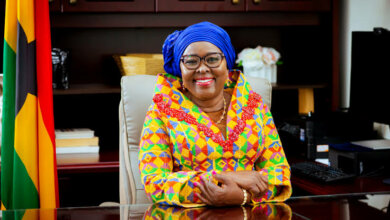
Ghana’s Deputy Ambassador to the United States, Ambassador Mrs. Jane Gasu Aheto, has described Ghanaians living and working abroad as a “brain bank” rather than a “brain drain,” arguing that their experience, expertise and global exposure can become a powerful resource for Ghana when they return home or channel their knowledge into the country’s development.
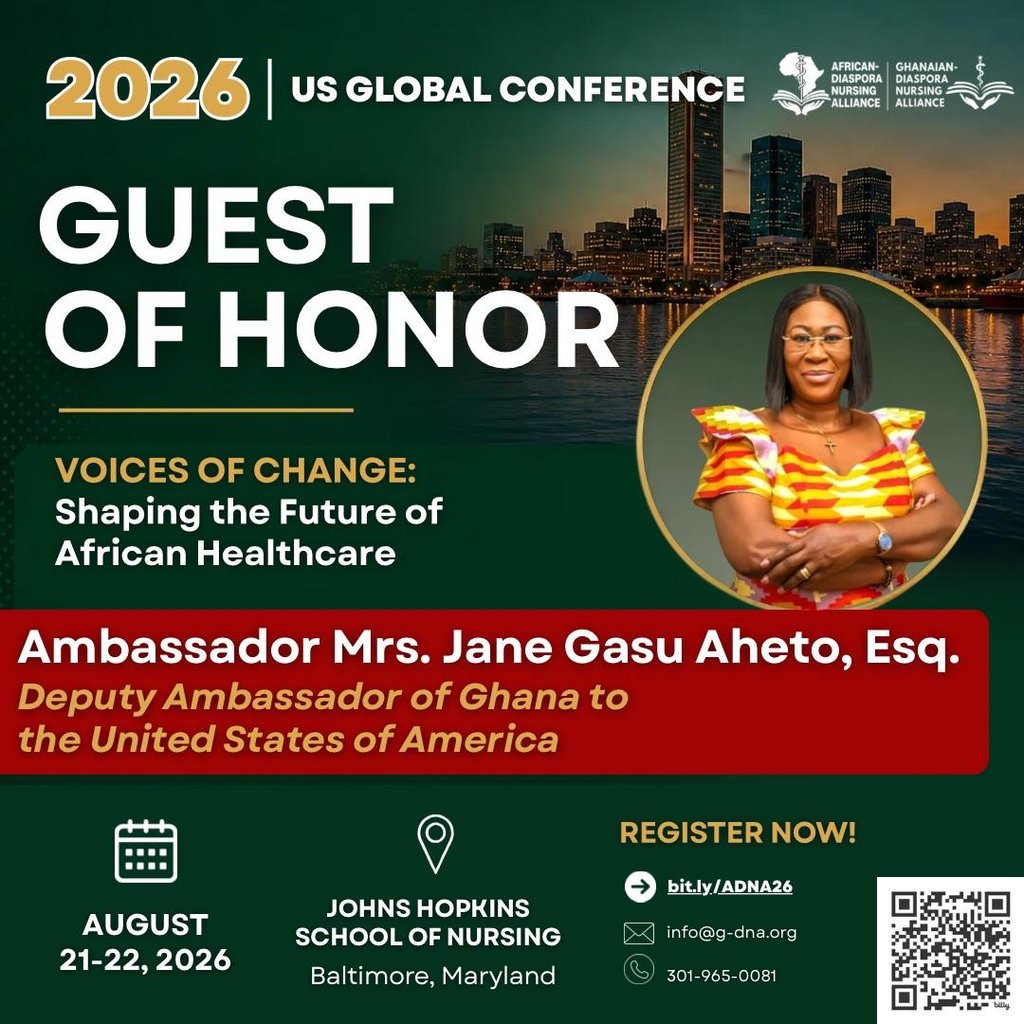
Ambassador Aheto made the remarks while serving as Guest of Honor at the 2026 African-Diaspora Nursing Alliance (A-DNA) U.S. Conference in Baltimore, Maryland, where she called for international health worker mobility to be linked to ethical recruitment, stronger partnerships and meaningful reinvestment in countries of origin.
The conference, held at the Johns Hopkins School of Nursing on August 21–22, was centered on the theme, “Translating ethical recruitment into reinvestment: Innovation and partnership models in global healthcare workforce mobility.”
Addressing nurses, midwives, healthcare professionals, researchers, policymakers and members of the African diaspora, Aheto said the movement of healthcare professionals across borders should no longer be viewed simply through the lens of “brain drain.”
“For too long, the narrative has been one of ‘brain drain,’ a one-way flow that depletes the very systems countries like mine are striving to build,” she said.
But she argued that the conversation is changing, particularly as governments and international organizations consider how healthcare worker migration can benefit both source and destination countries.
“The question is no longer if our professionals will seek global opportunities, but how we can ensure that their mobility becomes a catalyst for growth at home,” Aheto said.
Migration to reinvestment
According to the Deputy Ambassador, ethical recruitment must go beyond protecting healthcare workers from unfair labour practices. It should also create opportunities for countries such as Ghana to benefit from the knowledge and expertise accumulated by professionals working abroad.
She identified three areas that could help achieve this: ethics and transparency, partnerships for systemic strengthening, and innovation. On ethical recruitment, Aheto pointed to Ghana’s health workforce cooperation with Jamaica as an example of bilateral engagement aimed at promoting fair labour conditions and mutual benefit.
She said international agreements should protect healthcare professionals while ensuring that their skills are valued and that the movement of talent is managed with “dignity and foresight.” Ambassador Aheto also called for partnerships between Ghana and destination countries such as the United States to extend beyond recruitment.
Such partnerships, she argued, should include investment in health systems, particularly in the training and retention of healthcare workers in countries that produce them. For Ghana, she said, the diaspora represents an important resource in that process.
Nurses as a bridge between Ghana and the diaspora
Ambassador Aheto placed particular emphasis on the role of nurses and midwives, describing them as central to the functioning of health systems.
“To the nurses and midwives in this room: you are the heartbeat of our health systems,” she said.
She noted that healthcare professionals working in different parts of the United States and Ghana can contribute to one another through professional networks, mentorship, research, technology transfer and knowledge exchange.
“Whether you serve in Accra or Atlanta, Kumasi or Kentucky, your calling is sacred, and your impact is immeasurable,” she said.
She cited the work of A-DNA itself as an example of how diaspora networks can create connections between professionals abroad and institutions and communities in Africa.
The alliance, she said, has created opportunities for Ghanaian and African nurses in the diaspora to connect, share knowledge and contribute their expertise to healthcare development on the continent.
Ambassador Aheto also referenced A-DNA’s collaboration with the Nursing and Midwifery Council of Ghana, its engagement with institutions such as Johns Hopkins, and community initiatives including the Mama CVD project as examples of diaspora-led engagement.
Innovation as a tool for health-system development
The Deputy Ambassador also urged greater use of technology and innovation to strengthen healthcare systems. She pointed to digital health applications and e-learning initiatives in Ghana as examples of how expertise and technology can be used to expand access to knowledge and build more resilient health systems.
For Aheto, diaspora professionals have a role to play in accelerating that process by bringing international experience into partnerships with institutions and professionals at home.
She said the goal should be an Africa in which the movement of healthcare workers is a source of strength rather than weakness. She offered a simple illustration of the potential impact: “Where the skills of a nurse in Baltimore can help shape the health policy of a nation in Accra.”
It was in this context that Aheto described the diaspora as a “brain bank,” challenging the idea that the departure of skilled Ghanaians necessarily represents a permanent loss to the country.
“Thank you for reminding us that the diaspora is not a brain drain. It is a brain bank, and you are its most valuable trustees,” she told A-DNA leaders and members.
A call for deeper diaspora engagement
Ambassador Aheto said Ghana’s diaspora should be viewed as an important partner in the country’s efforts to strengthen its health system and develop its human capital.
She also linked the issue to Ghana’s broader development agenda, noting that the country is pursuing reforms aimed at strengthening its economy and health system, including through health financing and infrastructure.
She called on governments, healthcare institutions, professional associations and diaspora organizations to develop models that allow international mobility to produce benefits for both the countries professionals move to and the countries from which they originate.
Her remarks echoed the central question of the conference: how can ethical recruitment be translated into actual reinvestment? For Ambassador Aheto, the answer lies in moving beyond a recruitment-focused relationship and building sustained systems of cooperation in which healthcare professionals can pursue international opportunities while continuing to contribute to the development of their countries of origin.
As she closed her address, she urged A-DNA members to continue championing ethics, partnership, innovation and reinvestment. “Let us commit to building a world where every healthcare worker can pursue their dreams without abandoning their homeland,” she said.
She also called for a system in which both source and destination countries view health worker mobility as an opportunity rather than a threat, while protecting the dignity of healthcare workers and patients.
“The road ahead is long,” Ambassador Aheto said, “but I have no doubt that with organizations like A-DNA leading the way, we will reach our destination.” She ended by urging participants to seize the opportunity to turn professional mobility into lasting development.
Written by Oral Ofori for TheAfricanDream®