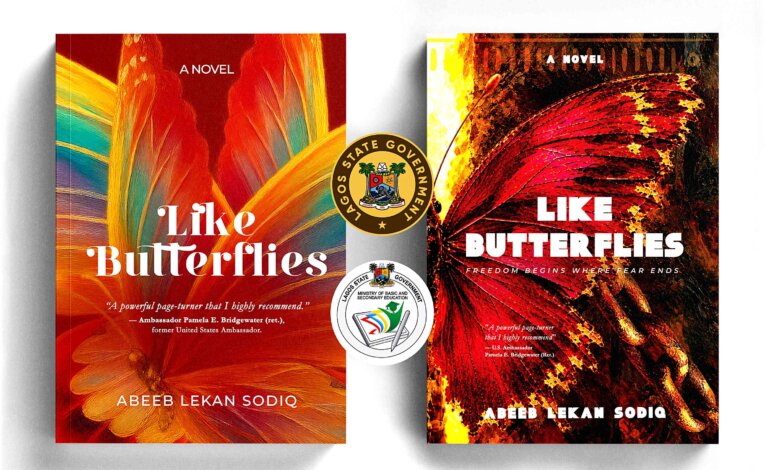
Photo (L-R): Old and new cover designs of the novel, Like Butterflies / © Abeeb Lekan Sodiq
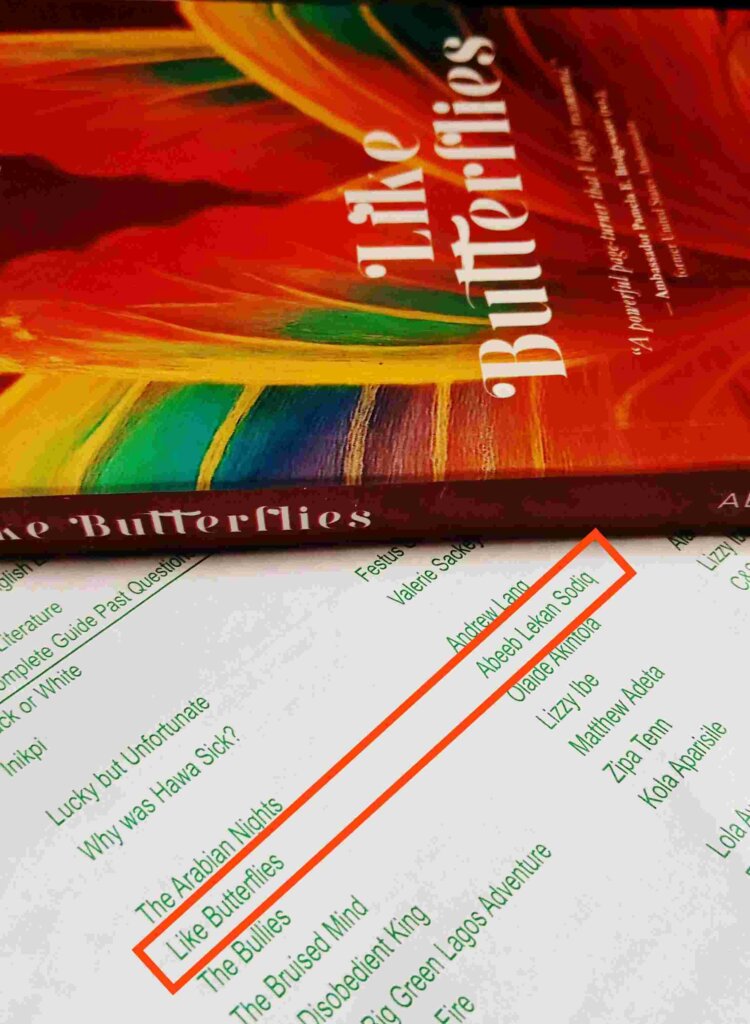
The Lagos State Government, Nigeria, through its Ministry of Basic and Secondary Education, has included Like Butterflies, a historical fiction novel by Nigerian author Abeeb Lekan Sodiq, in its 2026–2029 Approved Booklist for Senior Secondary Schools (SS1–SS3).
The novel appears under the Literature-in-English (Library) category as one of the recognised literary works in the state’s approved reading resources for senior secondary school students.
The development creates an opportunity for schools, educators and literary organisations to introduce the novel into student reading programmes, school libraries, book clubs, supplementary reading activities and other appropriate literary engagements.
Set in the 19th-century Oyo Empire in southwestern Nigeria, Like Butterflies tells the story of Sisi, a young princess who is kidnapped and sold into slavery, losing her royal identity and finding herself trapped within a system that reduces human beings to commodities.
Through Sisi’s experiences, the 217-page novel examines colonial structures of power, social hierarchy and classism within an African society, while exploring themes of freedom, forbidden love, betrayal, survival and human dignity.
One distinctive feature of the novel is its decision to begin and end within Africa, rather than follow the familiar narrative of many historical slave stories that conclude in the diaspora. The story also references historical locations and societies associated with the wider West African slave-trading era, including Dahomey and the Gold Coast.
Beyond its historical setting, the novel offers young readers an opportunity to examine questions of social inequality, class differences, prejudice and the consequences of unchecked power. Its central character’s determination to challenge the circumstances imposed upon her also introduces conversations about courage, youth leadership, self-determination and collective resistance.
“When I wrote Like Butterflies, I wanted to tell an African story that would entertain readers while also encouraging them to question the structures of power, inequality and oppression that have shaped our societies. Seeing the novel included in Lagos State’s approved booklist is particularly meaningful because it creates an opportunity for young people to encounter these conversations through literature.”
The Lagos State inclusion presents Sodiq with an opportunity to take African historical storytelling beyond individual readership and into a more structured educational environment. This includes encouraging students to engage critically with historical experiences and their relevance to contemporary society. Reacting to the development, Sodiq said:
“I hope students will not only discover more about our history but also develop the curiosity to question injustice, appreciate our cultural heritage and understand the importance of freedom and human dignity.”
On the sidelines, Sodiq unveils a redesigned cover reflecting the book’s central themes
Alongside the booklist inclusion, Sodiq unveiled a redesigned cover for the novel, replacing its previous artwork with a more symbolic interpretation of the book’s central themes.
The new cover features a large, damaged wine-coloured butterfly wing emerging from a dark, confined environment, with a heavy rusted chain positioned beside it and golden light breaking through the surrounding darkness. It also carries the tagline, “Freedom Begins Where Fear Ends.”
Explaining the symbolism behind the new design, Sodiq said: “The butterfly represents Sisi and other enslaved people including their humanity, identity and inherent desire for freedom. Its damaged, wine-coloured wings reflect the suffering and transformation they experience, while the heavy rusted chain represents the system of slavery and the structures of power and hierarchy that keep them trapped.”
He added: “At the same time, the golden light breaking through the darkness represents freedom and hope.”
According to Sodiq, the butterfly’s movement towards the light is also central to the visual interpretation of the story. “The butterfly is not simply trapped by the chain; it is pushing through an opening toward the light, suggesting that despite everything imposed upon it, it still possesses the will to escape and transform,” he explained.
The new cover’s visual narrative reflects what Sodiq describes as the novel’s movement from bondage and dehumanisation towards resistance, identity and freedom. Its tagline further reinforces the central tension between slavery and freedom explored throughout the story.
In May 2026, the Lagos State Council for Arts and Culture (LSCAC) endorsed the book, with its Chief Executive Officer, Idowu Johnson, describing it as insightful, and recognising its cultural and historical relevance.
It also received royal endorsements from traditional rulers in Lagos State, including Oba Ibrahim Olasunkanmi Lawal-Bello of Isheri Olofin Kingdom, and Oba Adewale M. Abdul, the Olofin Ajaye of Orugbo-Iddo Kingdom in Epe.
In August 2026, the novel was selected as the official text of a Book Reading and Playlet Competition organised as part of the International Leadership Academy Bootcamp (I LEAD 3.0) in Orugbo-Iddo, Epe. Powered by Gender Alive Foundation and hosted by Oba Adewale, the competition brought together students from 14 schools in Epe, who engaged with the story through quiz competition, interpretation and stage plays.
The author has also received international literary recognition through former United States Ambassador Pamela E. Bridgewater (ret.), who endorsed the manuscript before its publication, describing it as a fast-paced journey through the brutal realities of the 19th-century Oyo Empire slave era and the triumph of the human spirit’s determination to be free. The redesigned cover also features her endorsement, in which she describes the novel as “A powerful page-turner that I highly recommend.”
Schools, educators, literary organisations and other interested groups seeking to adopt Like Butterflies for reading programmes, school libraries, book clubs, literary competitions, author visits and other educational activities can contact the author on socials @abeeblekanbooks or send a mail through abeeblekanbooks@gmail.com.
Written by Oral Ofori for TheAfricanDream®