Ghanaian-Americans to convene in DC for Golden Symposium 2026
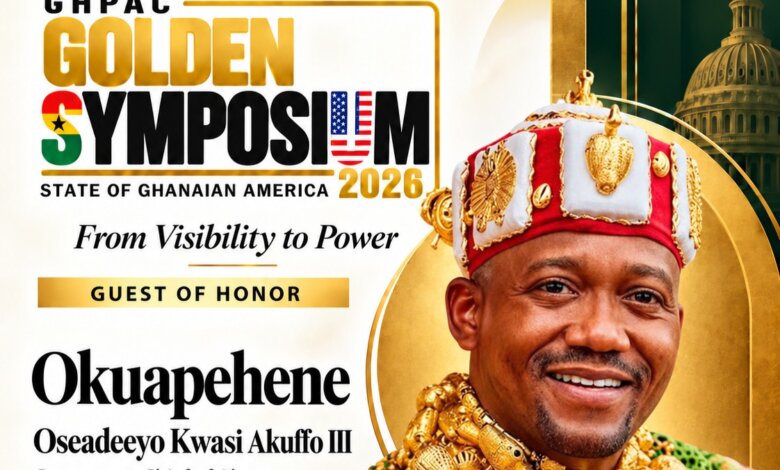
The Ghana Diaspora Public Affairs Collective (GHPAC) will convene Ghanaian Americans from across the United States in Washington, D.C., from November 7–9 for Golden Symposium 2026: State of Ghanaian America, under the theme “From Visibility to Power.”
The convening will feature a November 8 presentation of preliminary findings from a new research initiative examining the community’s population, geographic footprint, institutions, civic representation and economic participation, and the shared priorities that should guide its future.
Led by GHPAC Research Team, the State of Ghanaian America initiative seeks to build a more complete, evidence-based account of Ghanaian Americans beyond immigration statistics alone. The preliminary presentation is an early research milestone, not a completed national census or final report. GHPAC envisions a multi-year research and engagement platform that will inform community organizing, public policy, partnerships and future analysis leading toward the 2030 U.S. Census.
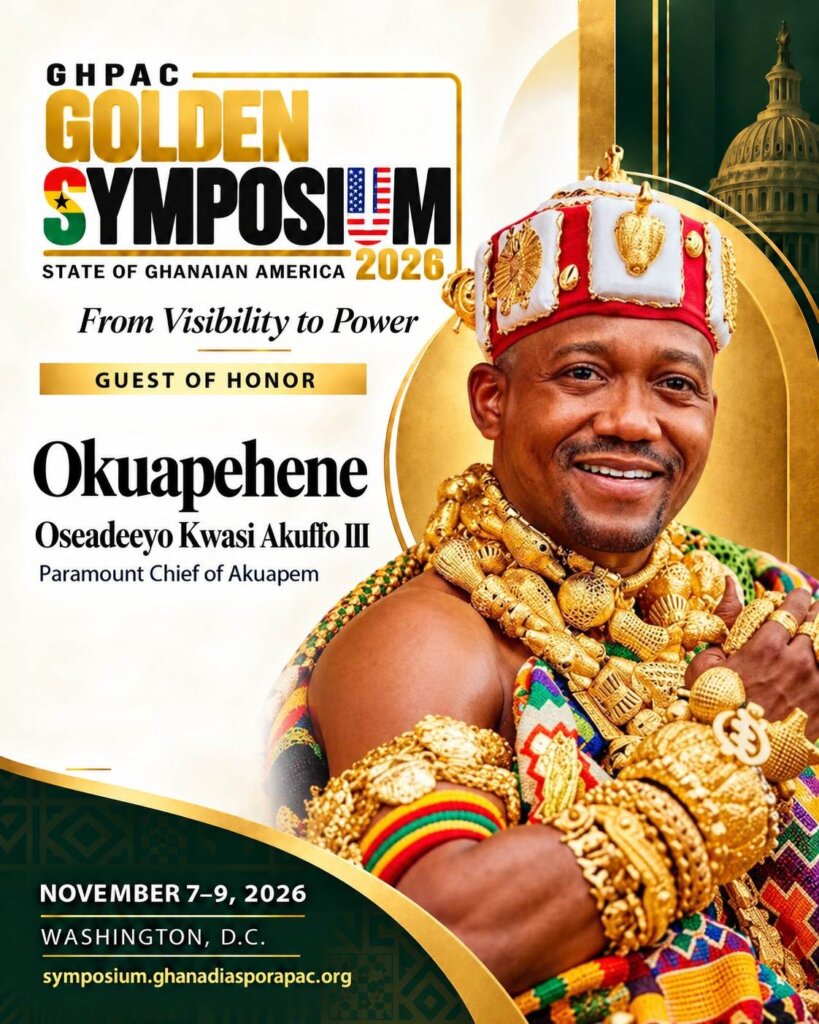
The symposium will also welcome Oseadeeyo Kwasi Akuffo III, the Okuapehene and paramount chief of Akuapem, as Guest of Honor. His record of diaspora investment outreach and cultural reconnection reflects the gathering’s emphasis on practical cross-border partnerships and the role traditional and civic institutions can play in building enduring ties.
The Okuapehene’s participation offers an additional international dimension to the symposium. The Akuapem leader has engaged diaspora investors and promoted cultural reconnection, underscoring the potential for Ghanaian American organizations to forge sustained partnerships with institutions in Ghana.
Nana Kyere Agyemang, Deputy Director of the Diaspora Affairs Office under the Office of President John Dramani Mahama, will also speak at the Golden Symposium, bringing a Ghana government perspective to discussions on diaspora engagement, national development, and strengthening relationships between Ghana and Ghanaian communities abroad.
The symposium takes place immediately after the November 3 U.S. midterm elections and will connect the research discussion with concrete conversations about citizenship, health professionals, entrepreneurship, intergenerational belonging and civic participation. Attendees will help identify questions for the next phase of research and practical priorities for community action.
Who Counts as Ghanaian America?
Published population figures tell only part of the story. Migration Policy Institute tabulations of Census Bureau data estimate approximately 223,000 Ghana-born immigrants in the United States in 2024 and a broader Ghanaian diaspora of approximately 332,000 residents with Ghanaian birth or ancestry ties in 2023.
These are distinct measures from different years—not interchangeable counts. GHPAC challenges the use of immigrant-only figures as a complete account of Ghanaian America. U.S.-born children and later generations belong in the conversation, along with the community’s institutions and connections across borders.
GHPAC’s public history platform presents a much larger all-generations estimate of 1.5–2 million-plus. That organizational estimate is not a verified Census count; documenting the population and explaining differences between measures are central to the research effort.
The convening accompanies GHPAC’s rollout of an online History of Ghanaian America timeline, connecting early Gold Coast educational exchange with later community institution-building and leadership. The documented history reaches back to James Emman Kwegyir Aggrey’s enrollment at Livingstone College in 1898. In 1963, Ghanaian student Sam Oni broke Mercer University’s racial barrier.
These histories connect Ghanaian presence to Black American education and the struggle for civil rights, long before today’s migration narratives. The timeline invites a wider view of contribution: from classrooms and community associations to healthcare, science, business, culture and public service. GHPAC invites families and institutions to help document notable people and milestones at http://ghanadiasporapac.org/ghanaianamerica/.
The symposium will create space for issues that reach beyond celebration:
- Frontline workers: recognition, wellbeing and leadership for Ghanaian nurses and other health professionals who help sustain American communities.
- Immigration and belonging: family stability, civic participation and the experience of building a life in the United States.
- Dual citizenship and diaspora rights: practical questions about identity, documentation and participation across two countries.
- The cost of connection: affordability of travel and the December homecoming season often called “Detty December,” alongside the pressures of remittances and responsibilities to relatives.
- Beyond Remittances: financial literacy, wealth-building, entrepreneurship and U.S.–Ghana economic opportunity.
The planned three-day program includes Saturday’s Community and Belonging gathering, Sunday’s Civic and Business Forum and preliminary research presentation, and a proposed Monday congressional briefing, subject to final arrangements.
The November 7–8 symposium sessions are planned for the Ronald Reagan Building and International Trade Center in Washington, D.C.; final attendance and logistical details will be communicated by the organizers. The program also encompasses technology and artificial intelligence, intergenerational dialogue, culture and networking.
GHPAC welcomes state delegations, Ghanaian associations, businesses, professional networks, students and friends of Ghana. Event information and registration are available at symposium.ghanadiasporapac.org. Journalists may request interviews, research updates and coverage information through info@ghanadiasporapac.org.
Founded in 2019, the Ghana Diaspora Public Affairs Collective is a nonpartisan, nonprofit social welfare advocacy organization advancing civic engagement, research, education and community building. It connects Ghanaian Americans and friends of Ghana around public leadership and shared priorities in the United States and Ghana.
Source: GHPAC