Why Ghana’s Democracy Demands Return to Responsible Speech
The pursuit of an open society often faces an important problem: the thin line between freedom and irresponsibility. True freedom allows people to speak openly without encouraging reckless behaviour. It supports disagreement without promoting disrespect; when we lose this distinction, something unfortunate happens. We may have the freedom to say anything, but sometimes we lose the sense of when, how, and to whom we should speak.
Today, Ghana’s public conversation is changing rapidly. Social media and digital platforms have made it easier than ever for people to express themselves. But instead of always leading to better discussions, they have often created a competition to see who can be the loudest or most controversial.
Strong emotions often receive more attention than thoughtful arguments. We have become more focused on how quickly words spread than on the effect those words have. This has contributed to a worrying culture of cruelty, hostility and deliberate dishonesty.
To stop this decline, we must understand that a healthy democracy cannot survive on anger and complaints alone. Disagreement is necessary for progress. It challenges those in power, exposes injustice and encourages institutions to improve. But disagreement must have limits.
When criticism ignores facts and respect, it stops being useful and becomes destructive. Disrespect for its own sake does not make society freer. Instead, it divides people and destroys the trust needed for citizens to govern themselves.
The effects of this change are real. When people stop thinking about the situation, timing and audience before they speak, truth becomes one of the first things to suffer. Public debate becomes a competition where winning today’s argument matters more than protecting the long-term interests of society.
We can see this in the weakening standards of our political institutions, the sensationalism of the media and the hostility that has become common in everyday conversations.
The Parliamentary Spectacle: A Sign of Cultural Decline
One of the clearest examples can be found in the very institutions that are supposed to protect our democracy. The recent disorder in Ghana’s Parliament, including the Minority’s walkout during the vetting of Supreme Court nominees and the physical clashes that resulted in damage to state property, is a clear sign of this problem.
Parliament is supposed to be a place where important national issues are discussed calmly and seriously. When it instead becomes a scene of broken microphones, shouting and political showmanship, it shows how far public debate has moved away from mutual respect.
This was more than a simple disagreement about parliamentary procedure. It reflected a political environment where public outrage can attract more attention than serious governance. The vetting process, which was meant to help protect the integrity of the Constitution, became a bitter political battle.
The conduct was condemned by the Speaker of Parliament, Alban Bagbin, who described it as a disgraceful display and pointed to a serious lack of emotional intelligence. When national leaders choose confrontation and disruption instead of working towards constitutional compromise, they send a dangerous message to the public: that the basic rules of respectful debate no longer matter.
If we want to restore healthy public debate, we must demand accountability from three groups: our leaders, our media and ourselves.
First Pillar: Political Leadership Beyond the Drama
First, political leaders must be held to a higher standard than partisan political drama. Good leadership should be judged by how leaders handle difficult problems with honesty and responsibility, not by how well they create outrage or attract attention.
The heated arguments over losses linked to the Domestic Gold Purchasing Programme show how easily serious economic issues can become political weapons. Instead of relying on transparent investigations and proper audits, politicians often choose to fight these battles through the media and public accusations.
When elected officials use their words to divide people instead of encouraging serious discussion, they should face consequences both from voters and within their political parties. We cannot build a strong democracy around one scandal after another.
A country facing difficult economic and social problems needs clear thinking, careful analysis and genuine patriotism. If politicians continue to believe that dividing people is the easiest way to gain political power, our institutions will become increasingly divided and eventually struggle to carry out their responsibilities.
Second Pillar: Moving the Media Away from Outrage
Second, the media must stop depending so heavily on controversy to attract attention and make money. A free press is essential to democracy, but its most important values should be accuracy, fairness and context—not clicks and engagement.
Today’s media environment often rewards conflict. Sensational headlines and controversial statements can attract more attention than serious discussions about public policy. When news organisations focus more on getting clicks than informing people, they contribute to the decline in the quality of public debate.
The spread of inflammatory statements instead of serious policy discussion has even led organisations such as the National Peace Council to call on politicians and media organisations to reduce provocative language and help protect Ghana’s peace.
It is ironic that at a time when people have access to more information than ever before, many people can still feel poorly informed. The media must remember its responsibility to provide reliable information and hold power accountable. It should not simply become a platform for whoever is willing to make the loudest or most controversial statement.
If the media abandons its ethical responsibilities, it risks changing from a protector of freedom into a source of confusion and division.
Third Pillar: Individual Responsibility
Finally, and perhaps most importantly, responsibility begins with each of us. The digital age has turned almost every citizen into a publisher. We can no longer blame institutions for a toxic public environment when we contribute to it through our clicks, comments, shares and attention.
The hostility we see on social media is not simply the fault of technology. It is also the result of choices made by individuals. We need to develop the discipline to stop, check information and think about the consequences of our words before putting them online.
This means resisting the urge to immediately share information simply because it makes us angry or confirms what we already believe. Taking a moment to check information before sharing it is an important part of responsible citizenship.
We should also ask for evidence and reliable sources instead of believing unverified graphics, social media posts and sensational headlines. We should treat the online public space with the same basic respect and responsibility that we would expect in a face-to-face community.
Freedom of speech is an important right, but it cannot survive on its own. It depends on a culture of responsibility. If we continue to treat speech as an excuse to say whatever we want without considering its consequences, we may eventually become a society where everyone can say anything, but very little has real meaning.
The choice to improve our public conversation is still ours. But the longer we allow this decline to continue, the harder it will become to reverse it.
Author
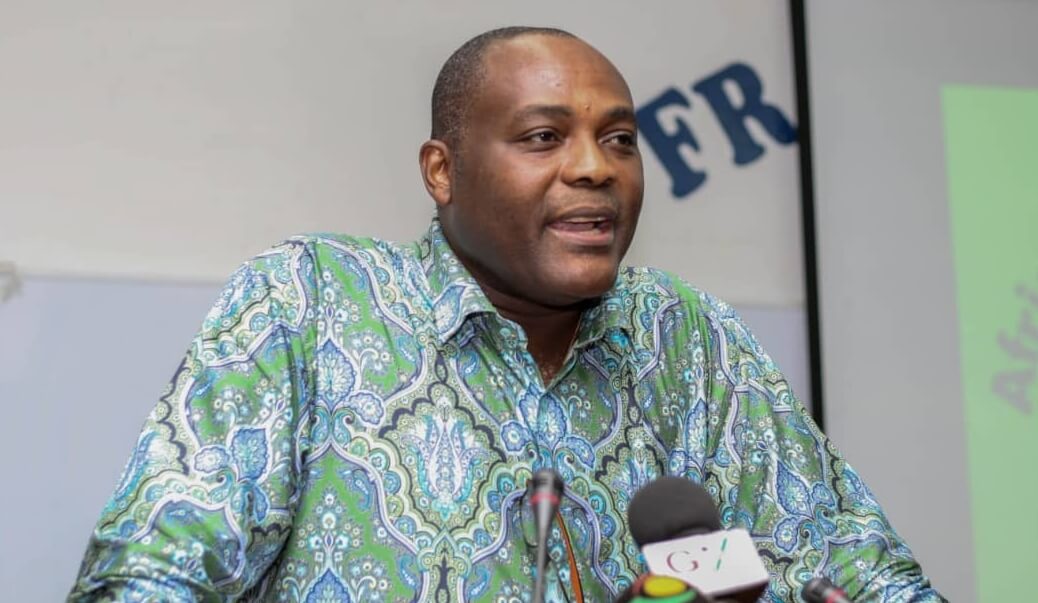
Mr Emmanuel Amponsah is the former Editor of The Spectator paper in Ghana.