Op-ed: The Succession Governance Gap – What Family Businesses Can Learn from Pension Fund Trustees
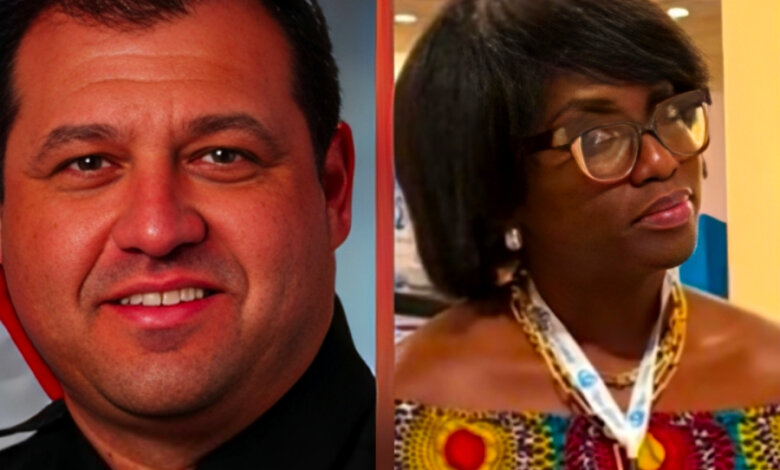
Photo (L-R): Jason Mantas and Sylvie Bello, (co-authors of this op-ed) serving as presenters at the Jan 2026 Opal Public Funds Conference in Scottsdale, Arizona, U.S.
Submitted to theafricandream.net by Jason Mantas and Sylvie Bello.
Women’s History Month celebrates historic appointments, the first woman elected, selected, or named to lead. What it rarely examines is what boards do, or fail to do, to build the governance infrastructure that should surround her once she gets there. The answer, more often than not, is not enough.
In January 2024, Harvard University found itself without a president. Claudine Gay, appointed just six months earlier as the institution’s first Black president and the first woman of color to hold that role in Harvard’s 387-year history, had resigned.
Whatever one believes about the circumstances, one governance fact is undeniable: one of the world’s most powerful boards, overseeing a $50 billion endowment, had no succession infrastructure ready for the moment her tenure ended. An interim stepped in. A search stretched on. The institution was unprepared. History had been made. Governance had not kept pace.
The irony is not incidental. Harvard Business Review, published by the same institution, has documented in peer-reviewed research that poorly managed leadership transitions destroy close to $1 trillion annually in global market value.
That research was co-authored by Carrie Green, Director of Equities at the Tennessee Consolidated Retirement System, a public pension fund professional, alongside a Harvard Business School fellow and a finance professor. Harvard’s own board demonstrated exactly the problem Harvard’s own research had quantified.
The pattern extends well beyond Cambridge. According to the National Association of Corporate Directors (NACD), the leading membership organization for U.S. corporate board directors — CEO succession planning ranks as the most critical board practice needing attention in its 2026 Governance Outlook, informed by a survey of more than 24,000 directors.
Fewer than one-third report being strongly confident their board has the collective skills to support the organization’s growth. More than 14 percent say their board probably or definitely does not have the right skills. Dollar General’s board replaced its chief executive after less than a year in the role in October 2023, with the board chairman stating publicly that the change was “necessary to restore stability and confidence.”
The former chief executive was brought back out of retirement to steady the institution. In March 2026, Dollar General announced yet another CEO succession, and its stock fell more than five percent the same day. Three successions in four years.
Russell Reynolds Associates (RRA), one of the world’s leading executive search and board advisory firms, reports CEO turnover at record highs, with median tenure declining and early, unplanned exits rising sharply. Its analysis of bank CEO transitions found that companies experiencing unplanned successions saw their stock fall an average of seven per cent the day of announcement.
The reverse is equally striking: RRA’s research shows that well-prepared transitions can enhance company valuations and investor returns by 20 to 25 percent. Succession governance is not only a risk to be managed. It is value waiting to be created.
The most dramatic illustration of ungoverned succession is unfolding in real time. LVMH, the Louis Vuitton Moët Hennessy conglomerate, the world’s largest luxury group valued at $350 billion and spanning more than 70 brands including Louis Vuitton, Dior, and Tiffany, has no disclosed succession plan for its 77-year-old chairman and chief executive, Bernard Arnault, who has led the group since 1989.
In January 2026, Deutsche Bank’s DWS investment arm, one of LVMH’s largest shareholders, stated publicly that succession planning at the company “appears unclear and opaque” and called the unresolved question “a risk factor.”
A corporate governance professor cited by Reuters called it plainly “a time bomb.” Investors are now assigning what analysts describe as a governance discount to the stock. The LVMH board has twice extended Arnault’s mandatory retirement age, now to 85.
LVMH is not an outlier among family enterprises. Harvard Business Review’s January 2026 research on founder transitions finds that founder-CEO handovers are significantly more prone to failure than other leadership transitions — a structural vulnerability compounded by founders’ tendency to define the successor in their own image rather than in terms of the institution’s future needs.
Deloitte Private’s February 2026 survey of 300 senior executives from U.S. family businesses puts a sharper point on it. Seventy-eight percent expect their company to undergo a CEO transition within the next decade, yet only 57 percent have a plan to manage one, and just 23 percent are actively implementing it.
Among those already behind schedule, nearly two-thirds say succession is simply not a critical priority at the moment. Deloitte calls this a “succession paradox.” It is, more precisely, a governance failure waiting to happen.
The gap between acknowledgment and action is not unique to family businesses. Korn Ferry, one of the world’s largest executive search and organizational consulting firms, finds that while 90 percent of organizations say succession planning is important, only 37 percent commit meaningful resources to it.
The same firm’s analysis of outcomes reveals what structured, process-driven succession actually produces: CEOs placed through rigorous succession processes have a 54 percent lower attrition rate by year three than the typical CEO. The data points in one direction. The behavior of most boards points in another.
Succession treated as a governance responsibility looks entirely different from succession treated as a personnel event. The institutions that have solved this are not the ones making headlines for getting it wrong. They are the ones most people have never considered as a governance model.
The distinction matters, and it begins with a specific experience. In June 2021, one of us, Jason Mantas, was a Trustee of the Fire and Police Pension Association of Colorado, early in his first term, when Executive Director Dan Slack, a thirteen-year leader of the organization, announced his retirement effective January 1, 2022.
The board immediately launched a nationwide search, and selected Kevin Lindahl, the organization’s General Counsel since 2000, who had held the dual role of General Counsel and Deputy Executive Director since 2018, as Slack’s successor.
The outcome was sound. But the process made visible something important: good governance and good fortune are not the same thing. The organization had been fortunate that its internally developed candidate happened to be the right one. That is different from being structurally prepared.
The question that followed was whether FPPA could build a succession process that did not depend on fortune at all. In December 2023, Mantas completed the National Accredited Fiduciary (NAF) program through the National Conference on Public Employee Retirement Systems (NCPERS), a nationally recognized credential covering governance, finance, risk management, and human capital.
The NAF curriculum dedicates a full module to succession planning, treating it not as a human resources exercise but as a fiduciary obligation, with attention to board succession, executive pipelines, and organizational continuity under multiple scenarios. That distinction, succession as governance rather than personnel management, became the framework the board would apply.
Over the following 12 to 18 months, board members and executive leaders, Mantas among them, attended structured educational sessions, worked through competing succession models, and had candid conversations about the organization’s vulnerabilities.
The board appointed an Ad Hoc Succession Planning Committee to manage formal plan development — a publicly documented governance structure with a defined mandate. What emerged addressed both emergency succession and planned internal succession for the Executive Director and other senior roles.
The plan created a Deputy Executive Director position for a nine-month structured transition period, with a defined handoff timeline and a 60 to 120-day advisory period for the outgoing leader before retirement. Throughout 2025, all executive leaders participated in a formal leadership development program, identifying, assessing, and developing the capabilities the organization will need going forward.
In the first quarter of 2026, the board selected Adam Franklin, the organization’s General Counsel, as the finalist for the Executive Director succession track. Franklin will serve as Deputy Executive Director through the remainder of 2026, while simultaneously identifying and developing his own successor in the General Counsel role. The planned transition to Executive Director is set for the first quarter of 2027.
Three succession decisions. One of us has been present for two of them as a Trustee and led the third as Board Chair. The first: in 2021, FPPA launched a nationwide search following Slack’s retirement announcement and selected Lindahl, the internal candidate who had been developed deliberately over eighteen years. The search confirmed what the organization had already built.
The second: when Lindahl became Executive Director in January 2022, his first act was to recruit Adam Franklin, then General Counsel at Colorado PERA, into the General Counsel seat he was vacating. Lindahl had walked that seat’s path to the top himself. He knew what it produced.
The third: in September 2024, the board, with Mantas serving as Chair, constituted a formal Ad Hoc Succession Planning Committee. Over seventeen months, the committee developed criteria, ran a structured assessment, and in the first quarter of 2026 selected Franklin as Deputy Executive Director and a succession-track candidate for Executive Director.
This time, no nationwide search was necessary. The succession plan had made one unnecessary. At FPPA, the path from General Counsel to Deputy Executive Director to Executive Director is not a coincidence. It is a design, and a board that understood succession as governance built it.
These are not exotic governance capabilities. They are the skills that pension fund trustees develop through credentialing, through fiduciary obligation, and through the lived experience of governing long-horizon institutions accountable to tens of thousands of beneficiaries.
The NAF program requires trustees to understand succession not as an event but as a system. The fiduciary standard demands it. And the governance record, documented in board minutes, committee mandates, and public succession announcements, demonstrates it. That training does not become irrelevant when a trustee’s term ends. It becomes portable.
The contrast with the broader landscape is instructive precisely because it spans every type of institution. Harvard could not sustain its historic appointment. Dollar General is entering its third CEO succession in four years.
LVMH, one of the most powerful family enterprises on earth, is being assigned a governance discount by its own investors because its board has not solved what smaller institutions solve as a matter of routine obligation. Forty-one percent of family offices lack a succession plan altogether, and thirty percent consider the next generation unprepared, according to Deloitte Private.
The institutions that have solved this problem apply succession governance not only inside their own walls but as a standard of diligence for the institutions they work with. The Chicago Teachers’ Pension Fund placed Western Asset Management on its watch list in June 2024 following the departure of a key portfolio manager, and terminated the $568.5 million mandate three months later.
In February 2026, the same fund placed investment manager Phocas on watch after its CEO and a portfolio management team member announced retirement, because the fund’s trustees could not, in their consultants’ words, “tell you with confidence there will be no issues here.”
Institutional investors price leadership continuity into capital allocation decisions as a matter of standard diligence. This is not aspirational governance. It is operational governance, practiced, documented, and applied to every institution in the portfolio.
Closing that gap requires looking honestly at who has already built what most private and family businesses have not: a formal succession structure, adopted before a crisis required it, governed by a board that treated leadership continuity as a fiduciary responsibility rather than a future agenda item.
Family businesses, private companies, and the venture capital and private equity portfolio companies whose governance gaps compound under investor scrutiny, all sit inside the same Deloitte succession paradox.
They do not need a new framework. They need to look at the one pension fund trustees have already been using, and ask why it has not yet found its way into their boardroom.
And for the institutions still making history with historic appointments: the boards best positioned to make those moments stick are the ones that have already built what pension fund trustees build as a matter of routine.
About authors
Jason Mantas, CPA, MBA is Chair of the Board of Trustees at the Fire and Police Pension Association of Colorado, a $6.4 billion public pension fund serving more than 26,000 Colorado firefighters and police officers. He is a National Accredited Fiduciary certified through the National Conference on Public Employee Retirement Systems and a member of the National Association of Corporate Directors.
Sylvie Bello is Founding Board Chair of the Cameroon American Council and a strategic advisor specializing in the Pension Fund Trustee to Corporate Board pipeline, with a focus on Black and African family offices. A sought-after speaker at pension fund conferences nationally, she has worked with organizations including Exelon, Yahoo, Freedom Coders, and workforce development initiatives bridging institutional governance with private capital.
Citations and sources
HBR — “The High Cost of Poor Succession Planning”, May–June 2021 Co-authored by Carrie Green, Director of Equities, Tennessee Consolidated Retirement System. Close to $1 trillion annually in global market value destroyed by poorly managed transitions. → source
HBR — “Leading After the Founder”, January–February 2026 Founder-CEO handovers significantly more prone to failure than other leadership transitions. → source
NACD 2026 Governance Outlook CEO succession ranks as most critical board practice; fewer than one-third of directors strongly confident in collective board skills. → source
Russell Reynolds Associates (RRA) — CEO Succession Planning Record CEO turnover; 7% average stock drop on unplanned announcement day; well-prepared transitions enhance valuations and returns by 20–25%. → source
Korn Ferry — “Revamping Succession” 90% of organizations acknowledge importance; only 37% commit meaningful resources. CEOs placed through rigorous succession processes have 54% lower attrition by year three. → source
Deloitte Private — Family Business Survey, February 2026 78% expect CEO transition within decade; only 23% actively implementing a plan. → source
CTPF — Western Asset Management termination, September 2024 Placed on watch June 2024 following portfolio manager departure; $568.5M mandate terminated September 2024. → source
CTPF — Phocas placed on watch, February 2026 CEO and portfolio manager retiring; succession concerns triggered watch list placement. → source
FPPA — Franklin named Deputy ED finalist, February 27, 2026 Per CRS §24-6-402(3.5) public notice. → source
FPPA Board minutes — Ad Hoc Succession Planning Committee, October 3, 2024 First public record of committee formation. → source
LinkedIn — Kevin Lindahl Confirms: GC (Jun 2000–Apr 2018) → GC + Deputy ED dual role (Apr 2018–Dec 2021) → ED (Jan 2022–present). 25 years 10 months total at FPPA. → source
LinkedIn — Adam Franklin Confirms: GC at Colorado PERA before FPPA; GC at FPPA (Mar 2022–Mar 2026) → Deputy ED (Mar 2026–present). → source