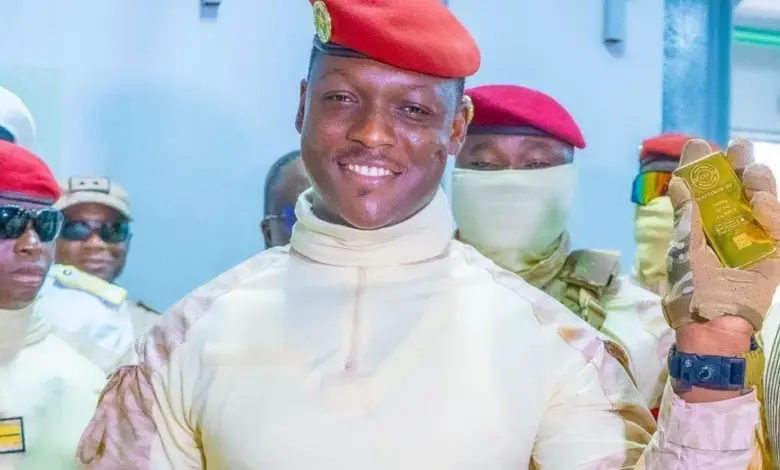
Burkina Faso has inaugurated its first national gold refinery in the capital, Ouagadougou, marking a significant step in the West African country’s efforts to process more of its mineral wealth domestically and retain greater economic value from gold production.
President Ibrahim Traoré officially opened the Raffinerie Nationale d’Or du Burkina Faso, known as RAFFINOR-BF, on September 28, 2026. The facility is expected to allow the country to refine gold locally rather than rely entirely on overseas facilities for that stage of production.
The inauguration forms part of the government’s broader economic sovereignty agenda, which places greater domestic control over natural resources at the centre of its development strategy.
“From now on, gold from Burkina Faso must not only be extracted in Burkina Faso, it must be processed, controlled, valued and certified in Burkina Faso,” Traoré said at the opening, according to the Associated Press.
The refinery was built on a five-hectare site in Ouagadougou at a reported cost of more than 11 billion CFA francs, approximately $19 million. Funding came from the Burkinabè state, including through the Société Nationale des Substances Précieuses (SONASP), in partnership with private-sector investors.
According to the government, RAFFINOR-BF has an initial annual refining capacity of 164 tonnes of gold, with plans to increase that capacity to 515 tonnes in a subsequent phase. The facility is intended to process gold from both industrial mining operations and artisanal production.
The refinery’s planned capacity exceeds Burkina Faso’s reported gold output, suggesting that the government also sees potential for processing gold from neighbouring countries. However, becoming a regional refining centre will depend on securing external supplies, meeting international market requirements and attracting customers.
Gold is central to Burkina Faso’s economy and export earnings. Yet producing gold domestically does not necessarily mean that all the economic benefits associated with processing, certification and subsequent trading remain within the country.
By introducing domestic refining capacity, the government aims to retain a greater share of this activity, develop technical expertise and create opportunities for local businesses.
At the inauguration, Traoré emphasised the importance of building specialised skills among young Burkinabè, linking the project to the need for greater local participation in the mineral value chain.
The extent of the economic benefits, however, will depend on how effectively the refinery operates, the volume and origin of gold it processes, and the extent to which its activities generate jobs, tax revenues and opportunities for domestic enterprises.
Burkina Faso’s investment comes amid a broader push by West African gold-producing countries to exercise greater control over their mineral resources.
In June 2025, neighbouring Mali began construction of a gold refinery near Bamako in partnership with Russia’s Yadran Group and a Swiss investment company. The planned facility was designed to process up to 200 tonnes annually, with the Malian government seeking to increase domestic control over gold processing and exports.
Guinea has also pursued plans to establish a regional gold-refining hub, reflecting growing interest across the region in retaining more economic value from mineral production rather than exporting material for processing elsewhere.
These developments point to a broader regional shift towards domestic mineral processing. Nevertheless, establishing a refinery is only one part of the challenge. Access to international markets, transparent gold-trading systems, reliable supply chains and effective oversight will remain important to determining the long-term results of these investments.
Written by Abeeb Lekan Sodiq for TheAfricanDream.net