Nathan Pryce’s ‘Cicle of Thoughts’ track explores personal growth
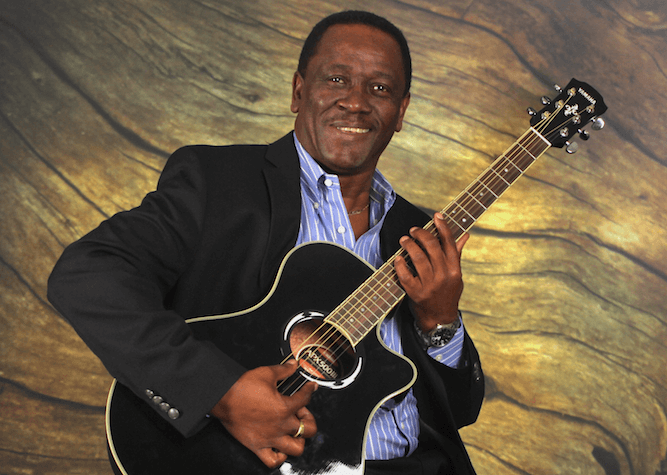
Ghanaian-American guitarist and musician Nathan Pryce turns inward with Cicle of Thoughts, a reflective new track that explores intentional thinking, personal growth, gratitude and the influence of the people surrounding us.
The song presents Pryce’s thoughts on the relationship between the mind and the direction of one’s life, encouraging listeners to become more deliberate about what they think about, what they consume and the people they allow into their inner circles.
At the centre of Cicle of Thoughts is a recurring message about the power of one’s thoughts. Pryce urges listeners to pay attention to the ideas they repeatedly entertain, while filtering out negativity and distractions that can interfere with personal purpose.
The message goes beyond individual thinking. Pryce also examines the influence of one’s environment, emphasizing the idea that people can be shaped by the company they keep. He advocates for what he describes as a “holy” circle, which is a supportive community built around love, focus and encouragement.
That emphasis on relationships gives the song another layer. Personal development, in Pryce’s telling, is not simply about changing one’s mindset in isolation. It also involves recognizing which relationships contribute to growth and which ones may undermine it.
The song touches on the movement from doubt and fear toward peace, light and gratitude. Pryce references the experience of “scrolling through the pain,” before turning toward a more intentional approach to life. The shift reflects one of the track’s central ideas: that transformation can begin with the conscious decision to change what receives attention.
He further develops that idea through the metaphor of protecting the mind like a garden. Just as a garden requires attention to what is planted and allowed to grow, Pryce suggests that people must be intentional about what they permit to take root in their minds.
The song consequently encourages listeners to establish boundaries with people who dismiss their aspirations or laugh at their dreams. Cicle of Thoughts comes against the backdrop of a musical journey that has connected his life in the United States with Ghanaian musical traditions.
In 2017, he collaborated with Ghanaian musicians to record a musical eulogy for Highlife legend Paapa Yankson. The project brought Pryce together with flutist Dela Botri and drummer Frank Kissi for a Smooth Jazz interpretation of Yankson’s Tena Me Nkyen.
Pryce told TheAfricanDream.net at the time that he had first met Yankson years earlier and had promised to reinterpret some of his music in a Smooth Jazz format. Following Yankson’s death in 2017, the guitarist fulfilled that promise through the tribute recording.
His musical work subsequently expanded into Dreams, a six-track Afro-Jazz project that blended Smooth Jazz with Highlife and Ghanaian traditional music.
TheAfricanDream.net reported in 2018 that the album represented a project that had been about two decades in the making, with Pryce composing and arranging the material and working with musicians including Dela Botri, Sammy Awuku and David Aidoo.
The project also took Pryce’s Ghanaian musical identity to an international audience. In 2018, he and his Dreams band performed AfroJazz and Highlife at the Embassy Chef Challenge in Washington, D.C., where the performance drew an enthusiastic response from the audience, including Ghana’s ambassador to the United States at the time, Dr. Baffour Adjei-Barwuah.
Pryce’s musical philosophy has also been documented outside TheAfricanDream.net. In a 2018 interview with the Daily Graphic, he described his approach to Smooth Jazz as incorporating elements from his Ghanaian background. His influences include guitarist Earl Klugh, whom Pryce has described as a guiding influence and with whom he has developed a friendship.
The Dreams album reflected that approach, combining Smooth Jazz, Highlife and Ghanaian traditional music. It included Pryce’s Ghanaian interpretation of Earl Klugh’s Cry a Little While, which he titled Su Kakra, alongside his reinterpretation of Paapa Yankson’s work.
Source: TheAfricanDream.co