African artists who have performed at the FIFA World Cup
The FIFA World Cup has long been a showcase for football’s greatest talents but also for the music and cultures that unite fans across the globe. With billions of viewers tuning in from every corner of the world, the tournament’s opening ceremonies, concerts, and official songs have become nearly as memorable as the matches themselves.
African artists have played an increasingly important role in shaping the World Cup’s soundtrack. Musicians from the continent have used football’s biggest stage to share African sounds, stories, and creativity with a global audience. Here is a look at the African artists who have performed at FIFA World Cup events over the years.
Freshlyground (South Africa) – 2010
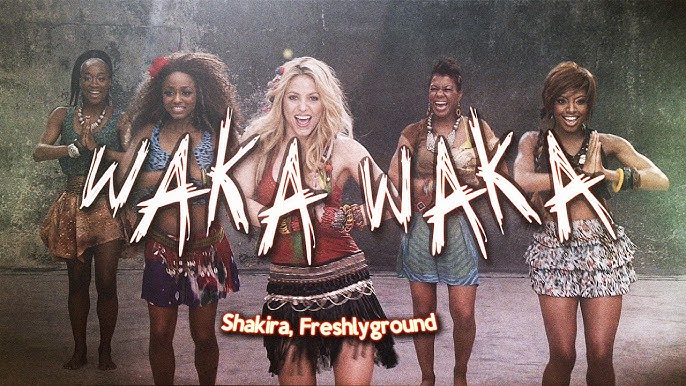
No African act is more closely associated with the FIFA World Cup than South Africa’s Freshlyground. The Afro-fusion group made history in 2010 when they teamed up with Shakira on “Waka Waka (This Time for Africa),” the official song of the FIFA World Cup. Performed during the tournament in South Africa, the song quickly became one of the most successful and recognizable World Cup anthems ever recorded.
For many football fans, “Waka Waka” remains synonymous with the excitement, colour, and energy of the first World Cup held on African soil. Freshlyground’s involvement ensured that Africa’s musical identity was embedded in one of the tournament’s defining moments. FIFA intentionally built the ceremony around African performers because it was the first World Cup ever hosted on African soil.
Yvonne Chaka Chaka (South Africa) – 2010
Known affectionately as the “Princess of Africa,” Yvonne Chaka Chaka was among the celebrated performers at the FIFA World Cup Kick-Off Concert in Soweto in 2010.
The veteran South African singer had already spent decades building a reputation as one of Africa’s most beloved musical exports. Her appearance at the concert reflected FIFA’s desire to highlight South African culture and honor the country’s contribution to the global game. For many local fans, her performance symbolized the pride of an entire continent hosting the World Cup for the first time.
Hugh Masekela (South Africa) – 2010
Few musicians have represented South Africa on the world stage as successfully as Hugh Masekela. The legendary trumpeter, singer, and anti-apartheid activist participated in the festivities surrounding the 2010 World Cup, bringing his unmistakable jazz sound to a worldwide audience.
Masekela’s inclusion was fitting. His music had long served as a soundtrack to South Africa’s struggles and triumphs, making him one of the most respected cultural ambassadors involved in the tournament.
Amadou & Mariam (Mali) – 2010
Malian musical duo Amadou & Mariam also joined the celebrations connected to the 2010 FIFA World Cup. Known for blending traditional African music with rock, pop, and blues influences, the husband-and-wife team helped showcase the diversity of African music during the tournament. Their participation reminded global audiences that Africa’s musical landscape extends far beyond any single genre or region.
Angelique Kidjo (Benin) – 2010
Grammy-winning singer Angelique Kidjo was another African music icon involved in World Cup-related performances and celebrations during South Africa 2010. Often described as one of Africa’s greatest living artists, Kidjo has spent decades promoting African culture on international stages. Her presence helped reinforce the tournament’s broader celebration of African excellence in music and the arts.
Femi Kuti (Nigeria) – 2010
Femi Kuti performed at the 2010 FIFA World Cup opening ceremony in South Africa. He is often overlooked when people compile lists of Nigerian artists associated with the World Cup. The ceremony was held at Soccer City Stadium in Johannesburg on 11 June 2010, the day South Africa played Mexico in the tournament’s opening match.
As the son of Afrobeat pioneer Fela Kuti, he carried forward one of Africa’s most influential musical legacies. His performance added a distinctly Nigerian and politically rooted Afrobeat sound to the global celebration.
K’naan (Somalia) – 2010
While Somali-born artist K’naan did not headline the official opening ceremony, no list of African artists associated with the World Cup would be complete without him.
His song “Wavin’ Flag” became one of the defining sounds of the 2010 tournament after being adopted by Coca-Cola as part of its global World Cup campaign. The song resonated with fans worldwide and remains one of the most beloved football anthems ever created. More than a decade later, “Wavin’ Flag” continues to evoke memories of South Africa’s historic World Cup.
Davido (Nigeria) 2022
Davido made history in 2022 by becoming the first Nigerian artist to prominently feature in an official FIFA World Cup soundtrack. He collaborated with Trinidad Cardona and Aisha on “Hayya Hayya (Better Together),” one of the tournament’s official songs.
His involvement was a landmark moment for Nigerian music because it placed Afrobeats at the centre of one of the world’s most watched sporting events. The song was performed at various FIFA events surrounding the tournament and became strongly associated with Qatar 2022. Davido’s participation also demonstrated how Nigerian artists had evolved from regional stars into globally recognised entertainers capable of representing entire continents on international platforms.
Rema (Nigeria) – 2026
Rema has also been announced as part of the 2026 FIFA World Cup entertainment lineup, further strengthening Nigeria’s presence on football’s biggest stage. Rema performed “Goals”, a FIFA World Cup 2026 song he recorded with LISA (Blackpink) and Anitta (Brazil).
The trio debuted the song during the Los Angeles opening ceremony events for the 2026 FIFA World Cup. As one of the leading voices of the new generation of Afrobeats artists, Rema represents a younger audience and the international expansion of Nigerian music.
Burna Boy (Nigeria) – 2026
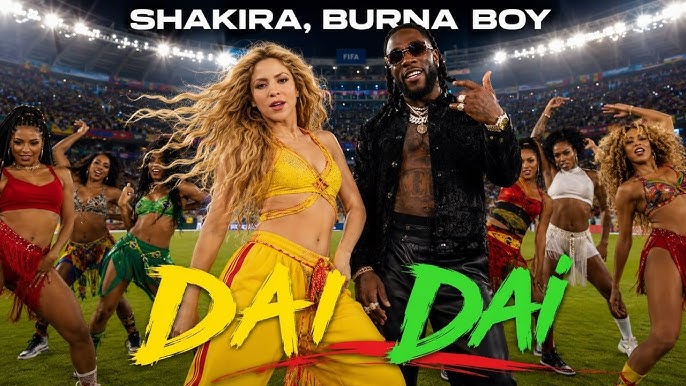
Africa’s modern musical influence was on full display at the 2026 FIFA World Cup thanks to Burna Boy. The Nigerian superstar, widely regarded as one of the leading figures in the global Afrobeats movement, performed “Dai Dai,” the official song of the 2026 tournament, alongside Shakira during the opening ceremony in Mexico City.
The performance marked another milestone for African music, placing Afrobeats at the center of one of the world’s most watched sporting events. Burna Boy’s appearance demonstrated how African music has evolved from being featured in World Cup celebrations to becoming one of the event’s main attractions.
Tyla (South Africa) – 2026
South African singer Tyla represented the next generation of African stars at the 2026 FIFA World Cup. Fresh off her meteoric rise to international fame, the Grammy-winning artist performed during the tournament’s opening celebrations alongside the Mzansi Youth Choir.
Her appearance was particularly symbolic. Sixteen years after South Africa hosted the World Cup and introduced the world to “Waka Waka,” another South African artist found herself performing on football’s biggest stage, highlighting the country’s continued influence on global music.
The Mzansi Youth Choir (South Africa) – 2010 & 2026
The choir performed at the 2026 FIFA World Cup opening match festivities before South Africa’s opening game against Mexico in Mexico City. They performed South Africa’s national anthem, “Nkosi Sikelel’ iAfrika,” alongside Tyla at Estadio Azteca before a global audience.
This is their second World Cup performance. The choir performed during the 2010 FIFA World Cup in South Africa, sharing the stage with Shakira and South African band Freshlyground for performances of “Waka Waka (This Time for Africa)”, both at the Kick-Off Concert and at the World Cup Final. This is documented in the choir’s official history.
Written by Kweku Sampson for TheAfricanDream®