Yvette Ngandu discusses DR Congo–Rwanda peace agreement
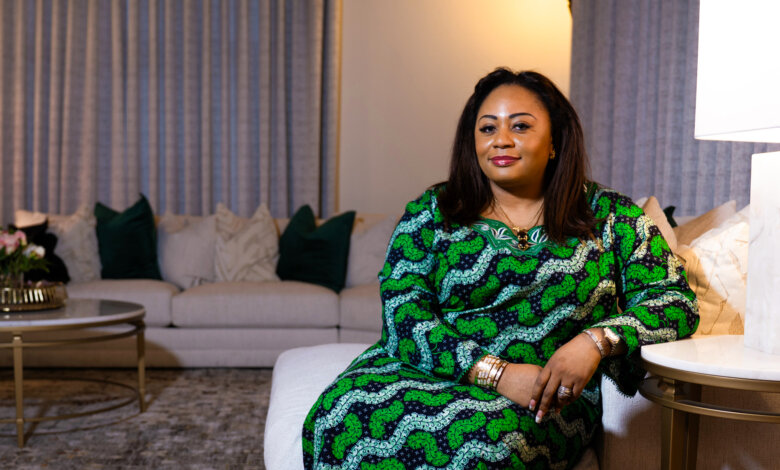
Fifty years from now, Kinshasa, the capital of the Democratic Republic of Congo (DRC) will rank as the world’s largest metropolis, with 58.4 million people. That’s more than twice New York City’s projected population of 27.9 million by 2075, according to one recent prediction.
Equally as shocking, the DRC itself will be the world’s fifth most populous country by 2100 (after India, China, Pakistan and Nigeria), says the United Nations. With 431 million inhabitants by then, it’ll outrank even the United States in population at current growth rates.
Fortunately, Congo is Africa’s second-largest country in size after Algeria; at 905,000 square miles it’s the 11th biggest on Earth. Yet despite its vast mineral wealth, it’s among the world’s poorest nations and will likely remain so for years, hobbled by regional wars and corruption.
That’s a lot to handle for any ambassador, though Yvette Kapinga Ngandu says she’s ready to take on the challenge. Ngandu said she’s had to hit the ground running, without the traditional honeymoon period.
“Even before being sworn in, I had to facilitate the peace agreement brokered by President Trump that the DRC was negotiating with Rwanda. Immediately when I came to Washington, that was high on my agenda,” she said. “Besides that very important document, we’ve also signed other agreements, all of which became the guiding principle of bilateral cooperation between the United States and the DRC.”
She added: “Now that the agreement has been signed, my job is to make sure it’s implemented. We’ve been at war with Rwanda for the past 30 years, virtually. Many people have said it’s a war between the DRC and various factions and militias, but the real broker of this conflict has been Rwanda all along. That’s why we signed the peace agreement on Dec. 4 with Rwanda, not with those factions. We’re really hoping this will bring an end to the conflict.”
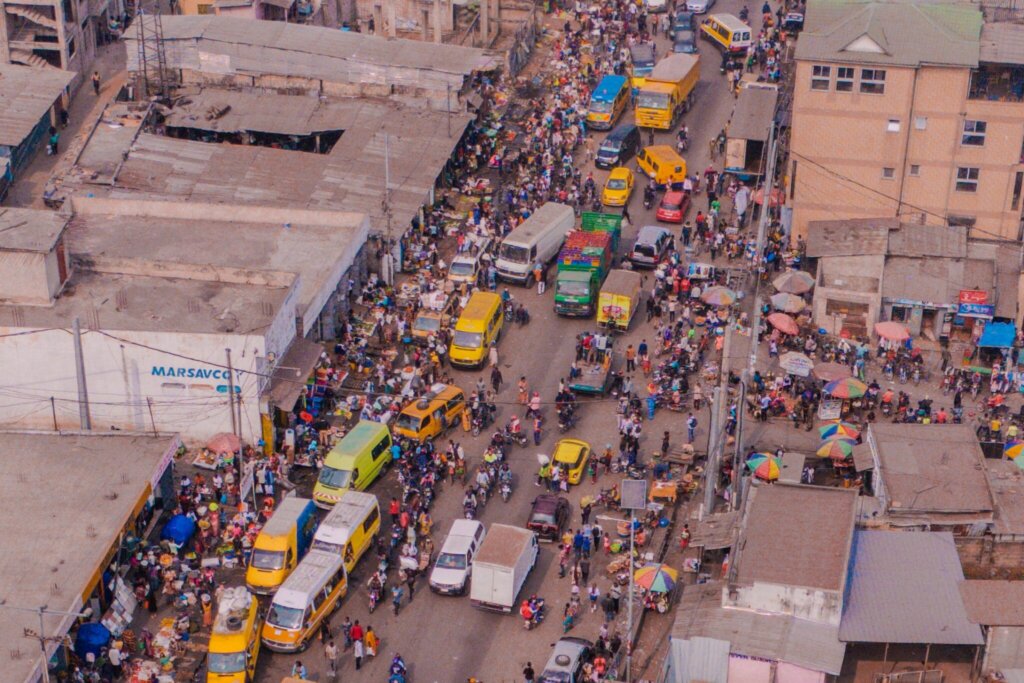
Ngandu, 49, replaced Marie-Hélène Mathey-Boo Lowumba as Congo’s ambassador to the United States on Oct. 30, 2025. A graduate of Ohio’s Bowling Green State University, she has degrees in public administration and international relations. The ambassador spent over 20 years in diplomacy, governance and peacebuilding, and was formerly the African Union’s representative in New York.
Ngandu has also worked with the AU Commission, and has participated in over 30 AU summits. A former advisor on the Great Lakes peace framework, the ambassador served in the African Peer Review Mechanism in Johannesburg, and in 2020, at the age of 44, she became the first woman to lead the Gender, Human and Social Development portfolio at the Gabon-based Central African regional bloc, ECCAS.
“My advocacy is to make sure that whatever I do, I do right by the Congolese women who have had to suffer because of this war,” she said. “Let’s remember that war doesn’t disrupt just infrastructure. It destroys lives, and women are targeted for a reason: because they bear life.”
Ngandu was previously senior Africa program manager at the New York-based International Peace Institute (2003-08). Before that, she worked in Washington with the National Endowment for Democracy, the Voice of America and the US State Department. Ngandu is fluent in French, English, Spanish and Lingala.
The conflict, which has been simmering for decades, broke out anew in 2022 after Rwandan forces intervened in the DRC to support the March 23 rebel group, known as M23 against the Congolese army, known as FARDC. Despite peace talks, fighting continues to rage in North and South Kivu provinces in eastern Congo.
On March 2, the US Treasury Department sanctioned the Rwanda Defense Force and four of its top officials for directly assisting M23. The ongoing violence has displaced millions of people, with widespread reports of atrocities in M23-controlled areas, including gang rape, torture and the detention of civilians in shipping containers.
Ngandu said various efforts have been made over the years to end the war, but none bore fruit.
“We’re putting all of our efforts behind the Washington agreement,” she said. “I think this has a lot to do with President Trump’s resolve, and his commitment to peace brokering and peace-building. In spite of what we’re seeing on the global stage, there’s a determination on his part to invest radically in the maturation of peace processes to come to a successful conclusion.”
She said that currently, three major Congolese cities; Uvira, Bukavu and Goma are “under the tutelage of Rwanda, illegally so,” adding that “the unquestionable withdrawal of Rwandan troops from DRC territory is paramount and key.”
She said her government is attempting to reimpose law and order in “every single corner of the eastern part of the DRC,” including Uvira.
“We’re hoping Rwanda pulls out in an orderly, peaceful manner, and not the way they’ve been doing, ransacking and pillaging Uvira when they left, basically forcing the state to go back to ground zero and rebuild the whole city once and for all,” she said. “We’re hoping it’s not going to be the case in Goma and Bukavu, but the plans are definitely already on paper and waiting to be ready to be implemented.”
When asked how much Rwanda (which at 10,169 sq miles is smaller than Maryland) has benefitted from its conflict with the DRC, Ngandu simply said: Follow the money.
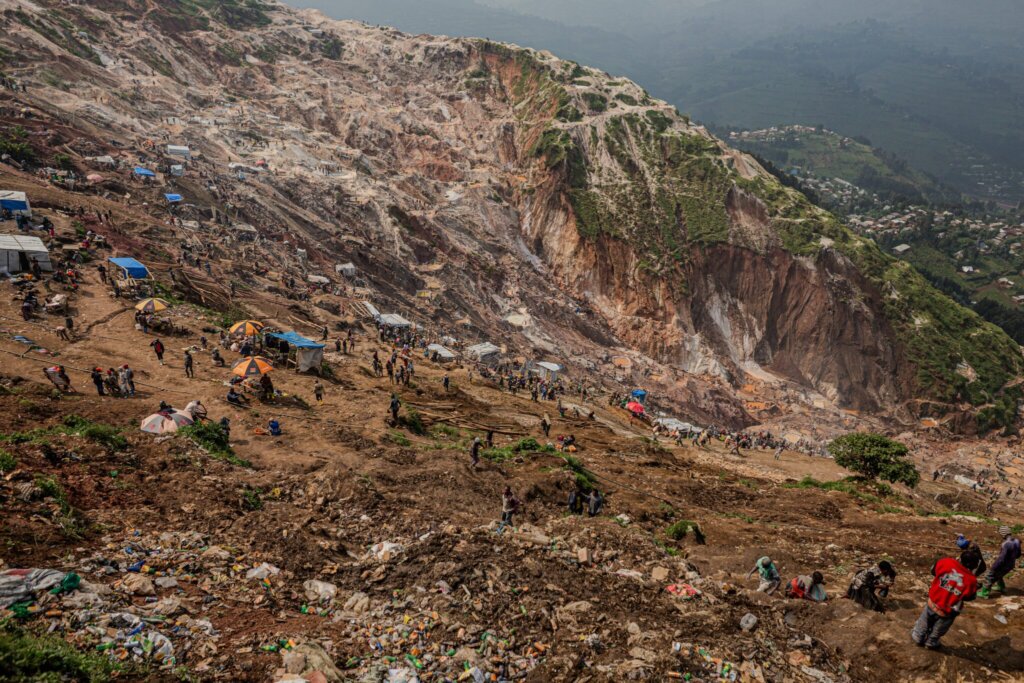
“Their exports of critical minerals since they’ve taken over our territory have literally tripled,” she claimed. “That should give you an idea as to the real reason behind the war. It’s not to protect random individuals, people who by now are Congolese, in fact. They’re not Rwandan citizens by any account. The real driver of this war has been the illegal exploitation of Congolese natural resources.”
Ngandu hinted that US and Chinese companies are also benefitting from the situation.
“There’s an international market out there that they have to service, which they are servicing,” she said. “It’s a mosaic of different companies who find that arrangement, albeit illegal, convenient to their self-interest.”
Asked about Africa’s enduring war on corruption, she said “that’s an issue all governments have to deal with, and we don’t have to go to Africa. But it’s something our president and the current government—headed by the prime minister—are actively working on.”
Case in point: Not long ago, Congo’s minister of justice was sentenced to prison for corruption following a public trial in which the allegations were found to be true, she said.
The ambassador said people often confuse her country with the much smaller Republic of Congo, whose capital is Brazzaville, just over the Congo River from Kinshasa.
“We don’t just share a name, we share borders and we share a river,” she said. “It happens frequently, but that doesn’t bother us because we consider each other twins to some extent. We have the same languages and many similarities, and our history is also intertwined.”
Once, the White House was even the source of the confusion, but Ngandu just laughed it off.
“The day of my credential ceremony, several ambassadors presented at once. And the very first to present his letter was the ambassador of Ghana,” she recalled. “President Trump looked at him and said, ‘ambassador of Congo, I’m sure.’ That tells you how much Congo is on the president’s mind. That was a good confusion.”
The tension between the DRC and Rwanda has resulted in some awkward moments for Ngandu, given that Rwanda’s ambassador here, Mathilde Mukantabana, is the dean of DC’s African diplomatic corps, having served in the post since July 2013.
“Diplomats are in a very difficult position because even though there’s war, we are the bearers of our countries’ positions,” she said. “You sever opportunities for dialogue only when you’re at your worst point. And to a big extent, we’re at the worst point we could be. Rwanda is clearly out of line.”
Nonetheless, she said, “we can still remain civil with one another. The ambassador, of course, is a colleague that I meet at multilateral events. She’s very tough. We’ve signed a peace agreement and that requires a certain level of civility to be upheld.”
“We’ve had an embassy here for a good 30 years, but we were observers. We were not known for being active, even invisible, I’d say,” she told us. “But there’s definitely been a change, and there will be increasingly more changes that we’ll be bringing on board.”
“These are some of the innovations we want to bring in, a go-getter type of approach to our diplomacy—a diplomacy that is not traditional but one that’s definitely out there, visible, without having to apologize for making demands or promoting itself,” she said. “Also, one that is connected to cultural diplomacy, and one that is also faith-based.”
Congo is 90% Christian, she said, with strong ties to US evangelical churches.
“In Rwanda, 800,000 people died and they call it a genocide. I’m not belittling that. It was very sad and it should never have happened. But in the eastern DRC, close to 15 million have died.”
Ngandu said pure greed is driving this particular genocide.
“The type of genocide we’ve seen up until now is ethnic, territorial or identity-related. This one has that, for sure, but there’s also this huge component that is solely based on economic motivation,” she said. “It’s literally what we call in French le grand remplacement—the big replacement. We need to wipe clean the entire zone so that the Rwandans can move in not just militarily, but also bring in settlers and expand our territory.”
Ngandu said her country was among the hardest-hit financially by the Trump administration’s recent dismemberment of the US Agency for International Development.
“It’s unfortunate, but we understand that America needs to reconsider,” she said, adding that US contributions to the UN’s Office for the Coordination of Humanitarian Affairs (OCHA) partially offset the loss of USAID money. “We understand there’s a need to mature from this aid type of approach to one geared towards better cooperation and infrastructure-related investment.”
Ngandu highlighted the Lobito Corridor Partnership involving the DRC, the United States, Angola and Zambia. This $2 billion economic integration effort, funded mostly by the Washington-based Export-Import Bank and various European sources—aims to create a regional rail link connecting the Angolan port of Lobito on the Atlantic to the mostly landlocked DRC.
“I think President Trump is being an astute and smart businessman,” she told the Diplomat. “No matter what they say, Rwanda has always done what they do for the sake of grabbing land and Congolese natural resources. Just follow the money. It’s simple mathematics.”
“I think the president is open to whomever wants to do business with the DRC,” she said. “The United States is demonstrating a desire to do clean business and to abide by its own rules. We can only continue to hope that China is also in the same state of mind.”
For the last 30 years, she said, the United States has been “the missing link.”
“We’re very grateful to whomever has attempted in the past to broker peace—whether it was the Americans, the Europeans or even the Africans, because Africa has also played a role.”
Belgium, the DRC’s former colonial ruler, has also been helpful, she said. Last year, the Belgian government broke diplomatic relations with Rwanda over the situation in eastern Congo, and its foreign minister encouraged other European countries to follow its example, adding that “they’ve played a very significant and positive role in pushing the process to evolve to where it is now.”
Source: Washington Diplomat