Wheeler del Torro speaks on Jamaican roots and ‘The Peace Cookbook’
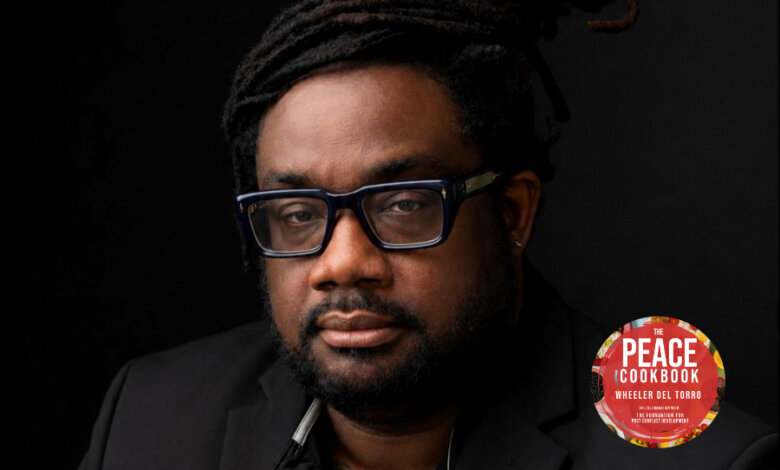
Wheeler del Torro discusses his Jamaican roots and his new work, The Peace Cookbook ahead of its September launch, in a recent interview with Oral Ofori of TheAfricanDream.net, explaining how he draws heavily from a combination of food and hospitality to promote cultural diplomacy. Del Torro also reflected on how his upbringing, family history, and exposure to Jamaican culture shaped his worldview and cookbook.
Del Torro traces his heritage through his father, who was of Cuban and Jamaican descent and spent part of his early life in Jamaica before migrating to the United Kingdom during the post-war Caribbean labour migration period.
His father built a life in hospitality and maritime work without formal education, an experience that molded del Torro’s early understanding of influence and human interaction.
“Through him, I learned early that hosting is not passive. It is a form of influence,” he said to Mr Ofori. “Even when you do not own the room, you can shape how people feel, how they interact, and what they remember.”
That idea became foundational to how he approaches both relationships and professional environments. Del Torro describes Jamaican culture, particularly its food traditions, as central to his understanding of community and storytelling. The idea is what his work The Peace Cookbook is interwoven with.
The cookbook brings together recipes and stories drawn from G7 nations and post-conflict regions across the globe. Its introduction is written by H.S.H. Prince Albert II of Monaco, and foreword comes from President and Nobel Peace Prize laureate José Ramos-Horta of Timor-Leste.
Each chapter of the book is tied to a country where del Torro’s Foundation for Post Conflict Development has worked or built lasting partnerships. In his conversation with Mr Ofori, he recalls his formative experiences in Jamaica with extended family, where social connection defined daily life.
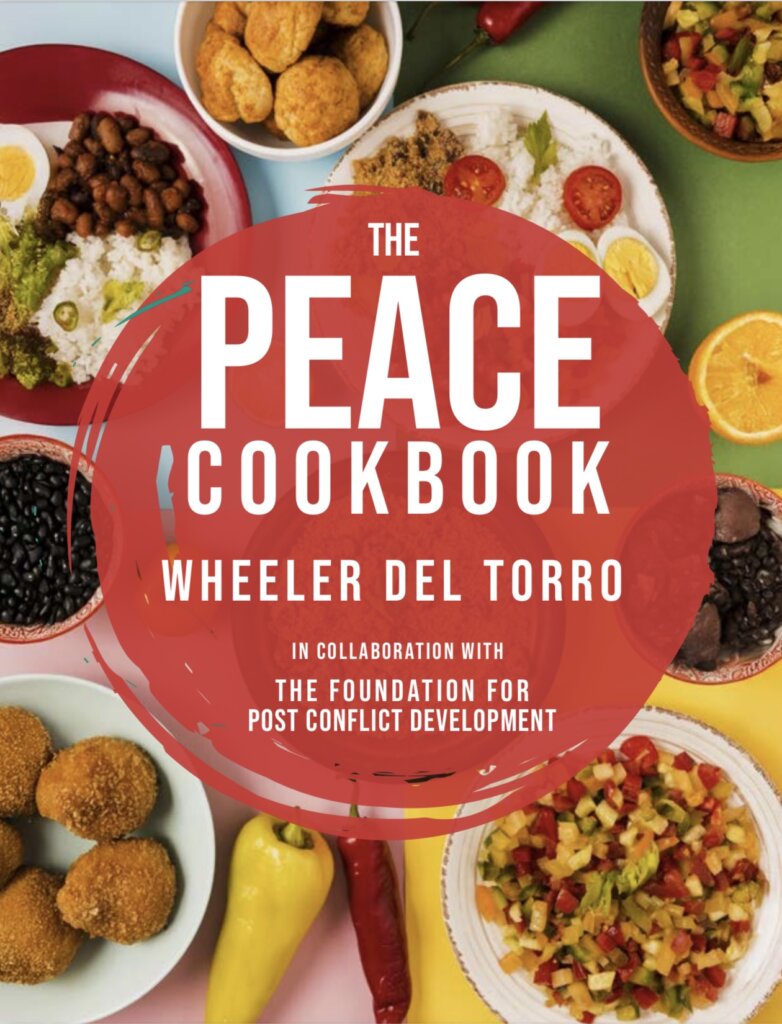
Photo: Wheeler del Torro’s book ‘The Peace Cookbook / © Del Torro
He highlights football games played with worn-out balls, neighbourhood dynamics, and communal responsibility as expressions of what he calls “social wealth.” He explains that food, in that context, also functioned more than just sustenance.
“It was never just about eating, it was about gathering, reinforcing relationships, and maintaining belonging,” he said to Mr Ofori.
He situates Jamaican culture within a global cultural influence, citing reggae figures like Bob Marley as examples of cultural export that transcend geography. For him, Jamaican cuisine operates in a similar way.
“Jamaican cuisine, whether it’s jerk chicken, ackee and saltfish, or rice and peas, carries story, history, and technique rooted in survival, migration, and adaptation. Every dish reflects layers of African, Indigenous, and colonial influence, transformed into something distinctly Jamaican” he said.
Del Torro explains that the concept behind The Peace Cookbook emerged early in his life, rooted in an awareness of conflict and a desire to understand how peace might be actively constructed rather than simply hoped for. He frames the kitchen and the table as spaces for connection, shaped by cultural practice and hospitality traditions he associates strongly with Jamaican upbringing.
“Bringing people together is not accidental. It’s structured through hospitality, tone, how you welcome someone, how you feed them, and how you make space for them to exist comfortably,” he said.
The book, he adds, translates these lived principles into a practical framework for engagement, particularly in contexts where formal diplomacy has not yet created trust. In examining Jamaican cuisine alongside Southern food traditions in the United States, del Torro describes both culinary systems as emerging from oppression and defined by creativity under limitation.
“What Jamaica mastered, long before people started using terms like ‘soft power’ or ‘cultural diplomacy’, is that it made people feel something first. And when people feel something, they listen,” he mentioned to Mr Ofori.
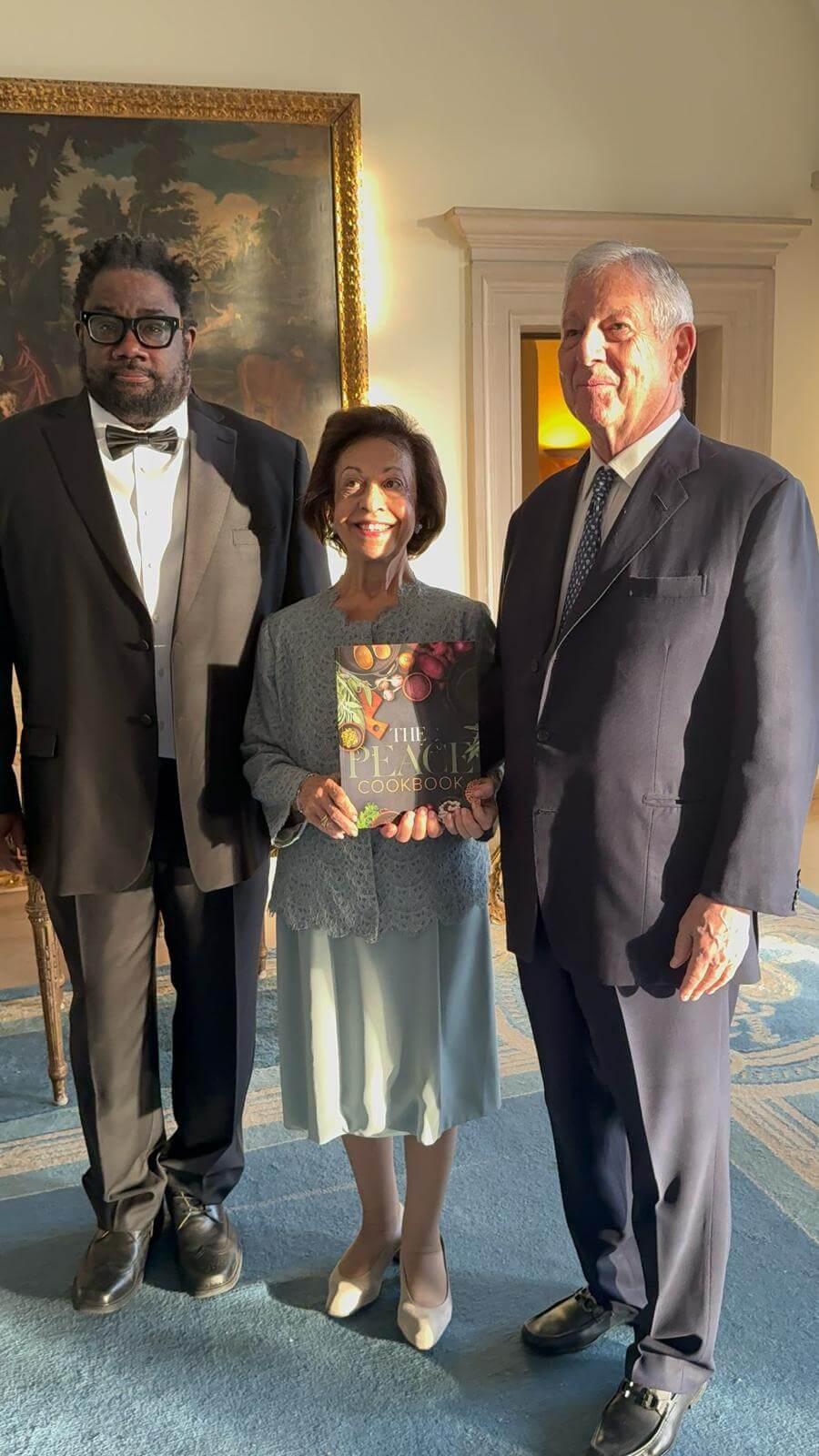
Photo: Wheeler del Torro (L) presenting a pre-launch copy of his book, ‘The Peace Cookbook’ to the head of the Serbian Royal Family, Crown Prince Alexander (R) and his wife, Crown Princess Katherine (M) at their Palace on May 15 / © Igor Ursic
Jamaican cooking traditions, he notes, reflect survival strategies and cultural continuity, citing Maroon communities and dishes such as callaloo and rice and peas as examples of adaptation and endurance.
“These recipes are systems of care,” he said, linking them to the fundamental vision of The Peace Cookbook. Del Torro also situates his heritage within his work in international spaces, including engagements with institutions such as the United Nations.
Central to this approach are dinner gatherings designed to bring together diplomats and representatives. He argues that perception and trust precede formal policy outcomes, and that cultural environments can play a decisive role in shaping both.
“I do not approach global audiences as distant stakeholders, but as individuals who need a shared environment before meaningful dialogue can happen,” he said.
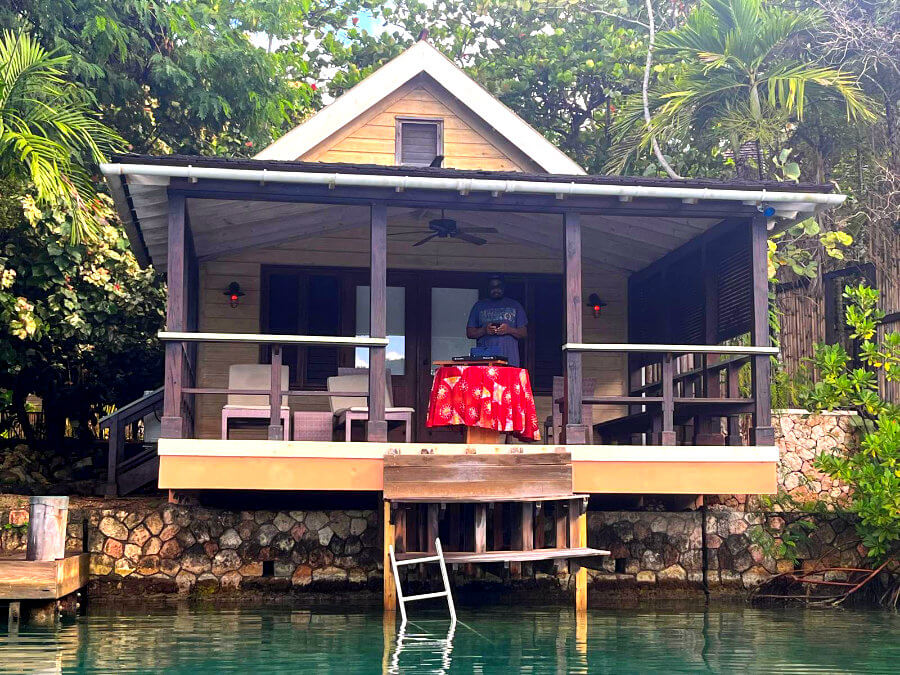
Photo: Wheeler del Torro at the GoldenEye Hotel & Resort in the quiet village of Oracabessa Bay on Jamaica’s north coast / © del Torro
Reflecting on Jamaica’s global cultural presence, del Torro calls the country an leading example of cultural diplomacy in practice. He connects this influence to both music and cuisine, suggesting that Jamaica’s global reach demonstrates how cultural identity can shape international perception.
“The Peace Cookbook,” he argues, extends this tradition into diplomatic practice. “It applies the same principle, using culture as an entry point, to diplomatic environments,” he said. “It demonstrates how informal, culturally grounded experiences can support formal international objectives.”
Del Torro concludes by saying his work is rooted in Jamaican cultural values, and describes his approach to international engagement as an extension of cultural training learned through experience.
“The message I would like to share with the Jamaican community and its institutions, including the Embassy, is that Jamaican culture is not just part of my background, it is the foundation of how I move through the world and the basis of the work I am bringing into international spaces.”
What del Torro brings is a Jamaican approach to diplomatic connection, The Peace Cookbook serves as the vehicle for that philosophy. But the broader objective is to create environments where people can see one another clearly, engage openly, and build levels of trust that may not otherwise emerge.
The Peace Cookbook will be launched during United Nations General Assembly Week in New York, United States, scheduled to take place at Hard Rock Cafe Times Square on September 21, 2026.
Written by Abeeb Lekan Sodiq