New Economy, same old tricks?
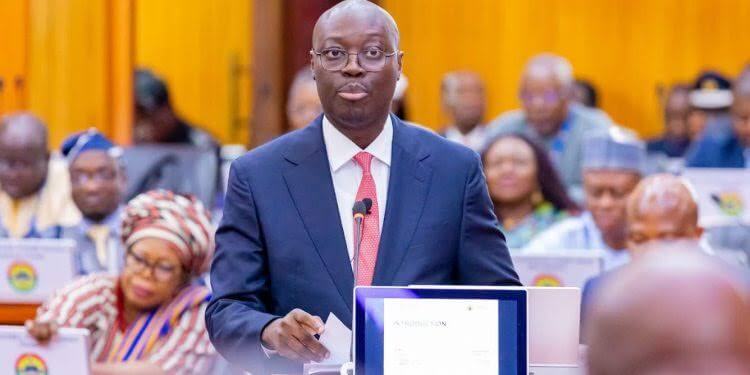
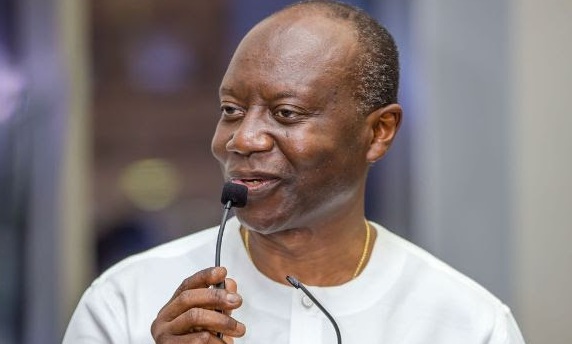
Just 24 hours after Ghana’s Finance Minister, Dr. Cassiel Ato Forson, stood before Parliament to present the 2027 Budget, the streets of Accra are already buzzing with a familiar national debate. In his speech, the Minister unveiled a four-year, $10 billion master plan called the “New Economy.”
The government promises to move away from simply fixing broken numbers and enter a new era of fast production, eight golden pillars, and an ambitious eight percent growth target. There is just one small problem. Economists, political opponents and everyday citizens are looking closely at this “brand-new” plan and asking if it is simply last year’s failed promise wearing a fresh coat of paint.
The Professor’s Warning: “Don’t Just Wash the Car, Fix the Engine“
Stepping onto the pitch with a yellow card in hand is University of Ghana economist Professor Godfred Bokpin. While the government celebrates impressive charts and graphs, Prof. Bokpin is reminding everyone that numbers on a whiteboard do not automatically put kenkey on a family’s dinner table.
In simple terms, the professor warned the government to focus on inclusive growth—the kind of progress that actually reaches the pockets of ordinary people. He pointed out that Ghana has never suffered from a shortage of fancy policy names. Rather, the country suffers from a shortage of action.
Prof. Bokpin cautioned against starving the economy of real spending while expecting miracles. To put it plainly, you cannot leave a car without fuel, wash the windshield, and expect it to fly to the moon. Until bad roads are fixed and businesses can breathe, celebrating paper statistics feels like celebrating a goal before the ball has even been kicked.
The Advisor’s Defense: “It Is Clean, Pure, and Ready to Roll“
Defending the newborn policy with the calm smile of a salesman pitching a brand-new smartphone is Ministry of Finance technical advisor Dr. Theo Acheampong.
Dr. Acheampong pushed back against the doubters, insisting that the New Economy is a smart and natural next step. In his view, the government spent the last two years paying the painful entry fee to stabilise the economy. Now, he argues, Ghana is finally ready to step into the VIP section of real production, local manufacturing, and job creation.
According to Dr. Acheampong, the $10 billion blueprint is spotless, well-planned, and free of flaws. All Ghanaians need to do is relax, trust the process, and let the eight pillars do the heavy lifting.
The Opposition’s Charge: “Copy, Paste, and Where Is the Money?“
Across the aisle in Parliament, the Minority—led by former Finance Minister Dr. Mohammed Amin Adam and Ofoase-Ayirebi MP Kojo Oppong Nkrumah—did not bring applause to the debate. Instead, they brought a magnifying glass and a red pen.
The opposition claims the government has quietly taken the struggling “24-Hour Economy” policy, dusted off the old brochures, changed the font size, and slapped a $10 billion price tag on it. According to Dr. Amin Adam, six out of the eight pillars in the New Economy are practically carbon copies of the old 24-Hour Economy plan.
To make matters worse, the Minority asked a very sharp question: What happened to the billions of cedis Parliament already approved over the last two years for all the government’s previous poverty-fighting dreams? Calling the New Economy a political “scam,” the opposition demanded a clear financial roadmap before anyone signs off on another $10 billion of hopeful math.
The Verdict: Waiting at the Bus Stop
As the war of words rages between glossy government presentations and fiery radio interviews, the ordinary Ghanaian is left standing at the bus stop, checking an empty wallet.
Whether this $10 billion plan is a true industrial revolution or just the 24-Hour Economy wearing dark sunglasses and a sharp new suit remains to be seen. One thing is clear: in Ghanaian politics, you do not need a watch to tell the time. You simply wait one day after the budget reading, and the comedy show starts right on schedule.
Written by Emmanuel Amponsah, a former Editor of The Spectator newspaper in Ghana.