King Ayisoba, Rocky Dawuni seek GRAMMY vote for new track
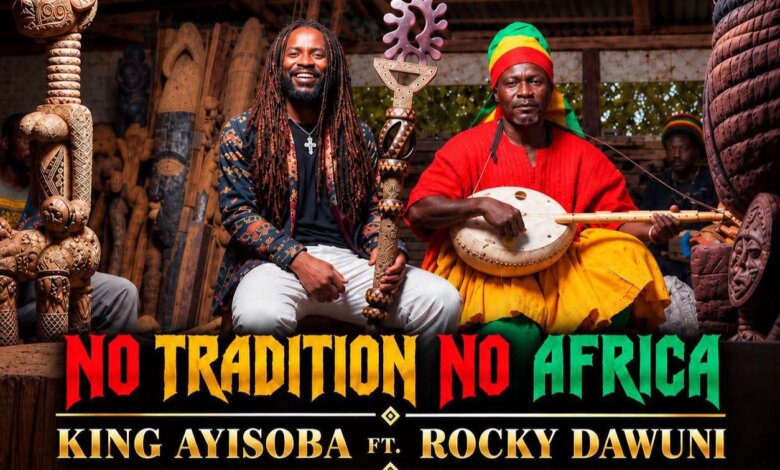
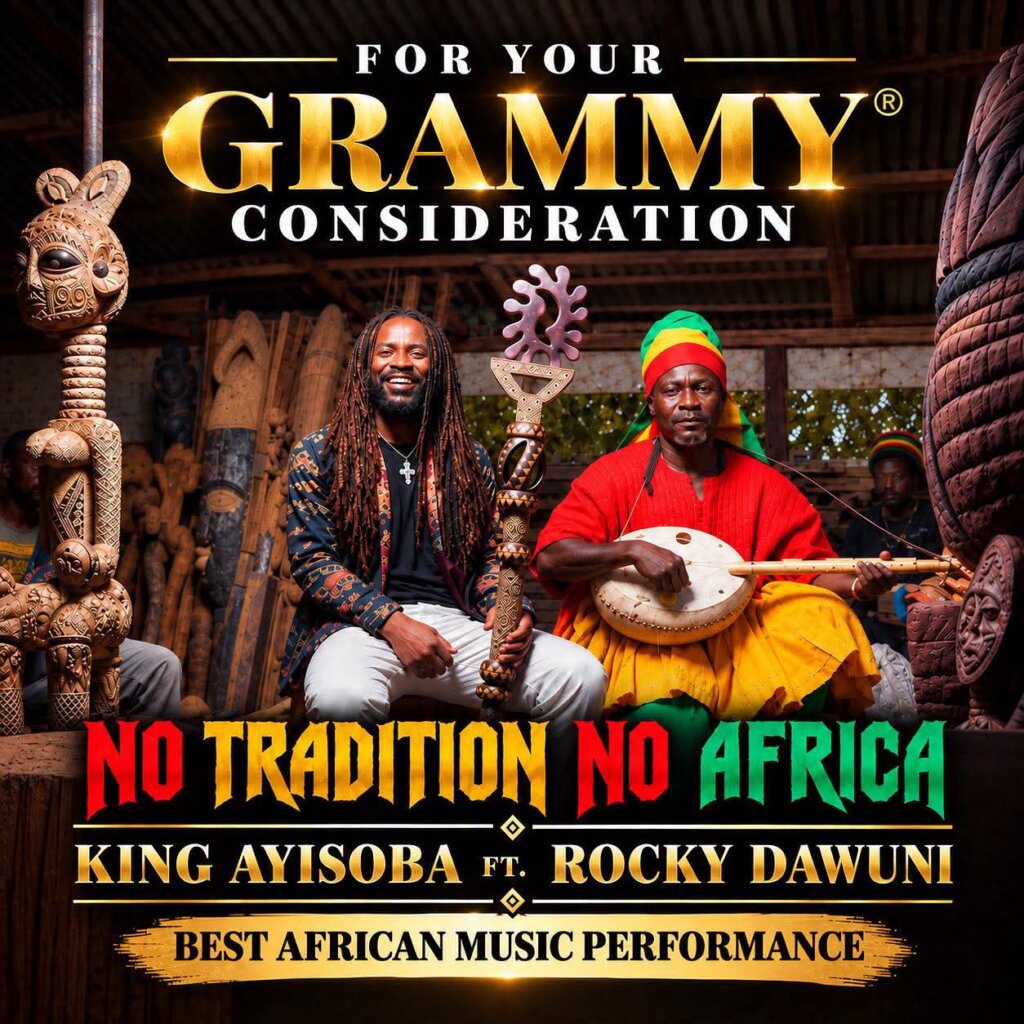
Ghanaian musicians King Ayisoba and Rocky Dawuni are seeking Recording Academy voters’ consideration for their collaborative track, “No Tradition No Africa,” in the Best African Music Performance category at the GRAMMY Awards.
The collaboration which brings together two distinctive voices in Ghanaian music was released in late May 2026 alongside its official music video. The track celebrates African identity, cultural heritage and the importance of preserving ancestral traditions.
Driven by King Ayisoba’s distinctive kologo rhythms, traditional percussion and Dawuni’s signature Afro-roots sound, the collaboration delivers a message about the relationship between cultural identity and Africa’s future. Also, through its title and message, the title highlights the importance of maintaining cultural connections while allowing African music to evolve and reach audiences around the world.
“Our strength is in our culture,” King Ayisoba said. “When we forget where we come from, we lose our way. This song is to remind us to go back, so we can go forward.”
Filmed in Ghana, the official video features elders, traditional custodians, dancers and local communities, highlighting the continuing relevance of African cultural practices. The production also features legendary Ghanaian musician Dela Botri on the atenteben, a traditional Ghanaian bamboo flute. Renowned Ghanaian producer Panji Anoff produced the track.
King Ayisoba is recognised for bringing the indigenous kologo music tradition of northern Ghana to international audiences. The two-stringed instrument is central to his distinctive sound, which combines traditional rhythms, energetic vocals and socially conscious storytelling.
He rose to national prominence with his debut album, Modern Ghanaians, released in 2006, and the hit song “I Want to See You My Father.” His growing reputation earned him two honours at the 2007 Ghana Music Awards: Song of the Year and Traditional Song of the Year.
Subsequent releases, including Africa, Wicked Leaders and 1000 Can Die, have strengthened his position as an important voice in contemporary African roots music. His work connects indigenous musical traditions with wider conversations about society, identity and cultural preservation.
With his new collaboration with Dawuni, King Ayisoba hopes to bring their message of cultural preservation to a wider international audience. Dawuni reinforces the song’s message in a lyric that questions the neglect of African heritage: “Now they throw away the gift of our ancestry. How many years before Africa go free?”
Their shared emphasis on African heritage gives “No Tradition No Africa” a message that stretches beyond entertainment to the preservation and celebration of the continent’s cultural identity.
Dawuni’s music connects African rhythms with influences from the Caribbean and the United States, often carrying messages of unity, hope, resilience and social change. He made history as the first Ghanaian musician to receive a GRAMMY nomination; his album Branches of the Same Tree earned a nomination for Best Reggae Album at the 58th Annual GRAMMY Awards in 2016.
He subsequently received nominations for Best Global Music Album for Voice of Bunbon, Vol. 1 at the 64th Annual GRAMMY Awards in 2022, Best Global Music Performance for “Neva Bow Down,” featuring Blvk H3ro, at the 65th Annual GRAMMY Awards in 2023, and Best Global Music Performance for “Rise” at the 67th Annual GRAMMY Awards in 2025.
Beyond his recording career, Dawuni has performed at internationally recognised venues, including the Kennedy Center, Lincoln Center and the Hollywood Bowl, and shared stages with prominent artists such as Stevie Wonder, Angélique Kidjo and John Legend.
His work also extends into environmental advocacy and cultural diplomacy. He serves as a United Nations Goodwill Ambassador for the Environment for Africa and has used his international platform to promote environmental awareness, cultural exchange and social development.
Commenting on the song’s theme and its correlation with contemporary Africa, Dawuni noted, “Africa’s time is now. But we cannot be free if we are ashamed of who we are. The beauty is in our tradition. That is where the power is.”
Written by Abeeb Lekan Sodiq for TheAfricanDream®