The controversial Ghana Jollof TikTok case has exploded into a full-blown national drama, pitting rigid state security laws directly against the fast-paced, unpredictable world of modern social media.
The Spicy Online Recipe
The viral TikTok account known as “Ghana Jollof” did not cook real rice. Instead, it served up heavy political gossip, sharp insults, and shocking claims that set high-ranking officials on edge.
For months, the anonymous operator dished out controversial videos that attracted thousands of views, shares, and passionate comments. Soon, the anonymous digital kitchen drew the intense attention of state security authorities.
The Wild Coup Rumour
The real trouble began when the account published a video making a wild claim. The post alleged that a near-coup d’état had just taken place at the Jubilee House, the seat of government.
State security heads treated the claim as a serious threat to public peace. Officials argued that such false news is designed to create deep fear and widespread alarm across the nation.
Enter the Police CID
The Ghana Police Service quickly launched a high-profile investigation into the network behind the screen. The Criminal Investigations Department (CID) stepped in to track down everyone linked to the viral content.
Police bosses stated that modern digital crimes require swift action. They warned that unverified rumours on social media can destabilise the country if left unchecked.
The Wanted TikTok Queen
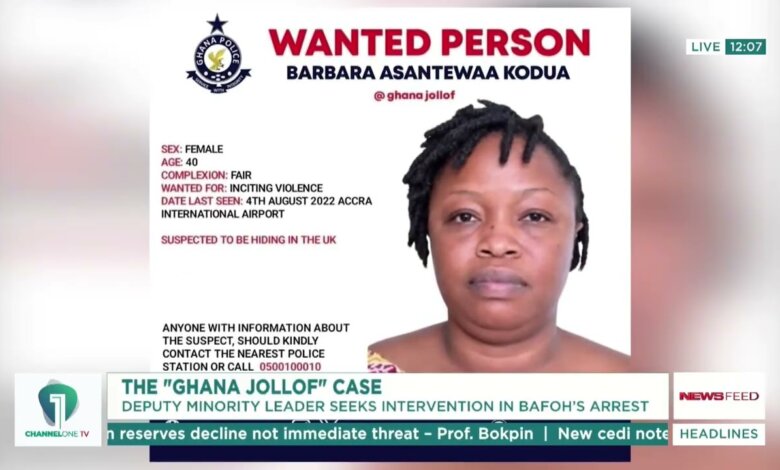
Authorities officially identified the elusive owner of the account as 40-year-old Barbara Asantewaa Kodua. The Ghana Police Service declared Barbara Asantewaa Kodua wanted in a formal public notice.
Police records show she was last seen at the Accra International Airport in August 2022. Investigators believe she is currently hiding out in the United Kingdom.
The Nurse in Handcuffs
While the main suspect remains overseas, local arrests have shaken the public. State security operatives arrested Salomey Awiti Baffoe, a senior nursing officer based in Techiman.
Baffoe was slapped with criminal charges for allegedly aiding and abetting the publication of false news. Police hauled her before the court, where she was ordered into a two-week remand.
Following the Money Trail
The CID Director-General dropped major bombshells during a televised press briefing. Police claimed that forensic phone checks revealed direct financial ties between Kodua and Baffoe.
According to the police, the overseas-based TikToker allegedly sent mobile money to Baffoe. Investigators claim those funds were used to pay local intermediaries to push and circulate the controversial videos.
The Defense Strikes Back
From her overseas hideout, Barbara Asantewaa Kodua fired back in a defiant online video. She heavily challenged the police narrative and questioned why an innocent nurse was kept behind bars.
Kodua even dared the Ghanaian government to attempt an extradition from the UK. She claimed her detention efforts amount to political pressure rather than a legitimate legal case.
Legal Eagles Circle the Case
Back in Ghana, prominent lawyers and politicians have joined the fierce debate. Critics argue that applying harsh criminal laws to everyday social media users goes too far.
Legal analysts point out that sharing or forwarding a video is standard internet culture. Punishing casual viewers and intermediaries creates a dangerous environment for free expression.
The Human Cost of Remand
Public sympathy quickly turned toward the arrested nursing mother. Community leaders complained that keeping a working mother in custody disrupts her family and children’s daily schooling.
Lawyers moved fast to file fresh bail applications at the High Court. They argue that detention before trial feels unyielding and disproportionate to the alleged offense.
A System Out of Step
The “Ghana Jollof” saga lays bare a deep friction in modern jurisprudence. Traditional state security laws were written long before smartphones and instant algorithms.
As the court dates approach, the nation watches closely. The final verdict will determine how far the state can go to police the digital thoughts and shares of its citizens.
Author
Mr Emmanuel Amponsah is the former Editor of The Spectator paper in Ghana.