Professor Lagoke shares passion for Pan-Africanism and how Ghana inspires it
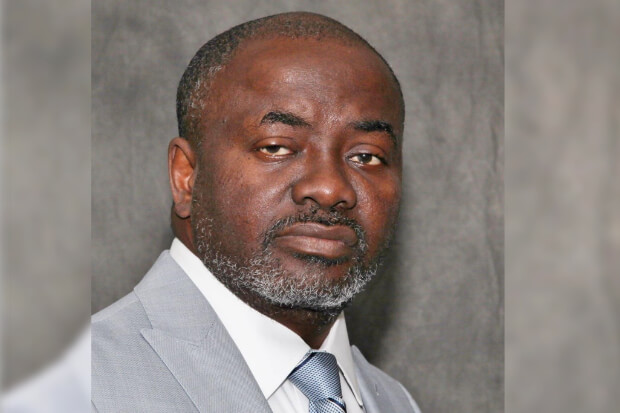
Professor Gnaka Lagoke, a Professor of Pan-African Studies at Lincoln University, says his passion to write a book on pan-Africanism stemmed from attending the All African Peoples Conference in Ghana in 2018. He says it formed part of the efforts to contribute to the knowledge available, in an interview with TheAfricanDream.co, “especially when not many publications could be found online about pan-Africanism.“
Professor Lagoke chairs the Department of Pan-African Studies. He is a specialist in geopolitics, International and African Development, comparative politics, reparative justice, and Pan-Africanism.
He co-founded the revival of Pan-Africanism in 2007 and has organised several Pan-African meetings, including serving as president of the scientific committee of the 9th Pan-African Congress held in Lome in December, 2025. Professor Lagoke, who is an author of many books, promotes a renewed vision of Pan-Africanism grounded in the philosophy of Ubuntu.
“I was at the 60th anniversary of the All Africa People’s conference in Ghana in 2018, then after that conference, I said, you know what, let me write a book because if you go online, you will be surprised there is no serious book on that topic,” he said to TheAfricanDream.co.
The Professor says he focused on the Ubuntu philosophy more because it sought to promote a new dispensation of Pan-Africanism, which rested upon the African value system and was promoted by Former South African President Nelson Mandela. He says the former president of Ghana, Dr Kwame Nkrumah, however, promoted socialism during his regime.
“But Mandela was the embodiment of Ubuntu and then because of his contributions today, everyone is talking about Ubuntu and then we think that contrary to Kwame Nkrumah who was talking about socialism”, Prof. Lagoke noted.
He went on to share that Pan-Africanism was about the holistic, collective self-determination of Africans, at home and abroad. He says when you talk about Pan-Africanism, you would see recurrent, competing approaches to race, to methodology, to process and then to geography.
“That is why for instance the question of race, some people when you say Pan- Africanism they think that it has to be about the black people. Some other people say white people and Asian Arabs can be part of the process. Some people say no.”
Pan-Africanism was changed in 1958, as it was no longer about black people but multi racial. He says his publication on the subject sort to rectify the historiography of Pan-Africanism and contribute to the expansion of the legacy of the first head of states, champion of the United States of Africa, Dr. Kwame Nkrumah.
“The African People’s Conference took place in Ghana in 1958, one year after the Independence of Ghana. In the beginning, it was a conference, but later it turned into an organisation. In 1960, the second iteration in Tunisia, the third one was in 1961 in Egypt. The conference gave birth to a series of debates leading to a permanent organisation and a Pan-African movement,” said Professor Lagoke to TheAfricanDream.co.
He outlined some Pan-African activities endorsed by the African Union of which includes the 9th African Congress in Togo in 2025, the conference of reparations in Accra in 2023 of which he attended.
“I was there in November 2023, and South Africa has been leading since 2013, including the Agenda 2063. Then Algeria started a conference about the crimes of colonialism, they invited some intellectuals, and we went there to engage in the event“.
In an outline, Prof Lagoke defined how the African Union Day celebration was birthed and how the date for its celebration was changed from April 15th to May 25th.
“All African Peoples Conference endorsed the idea of the Africa Day because the conference of independent African states was supposed to take place every two years, which was before they organized the 2nd conference of independent African states. The All African Peoples Conference had already held two iterations in 1958 and 1959; those involved in the conference were already organising celebrations of Africa Day in South Africa, Russia, and the US. Later on, when the Organization of the African Unity was created, they changed it from April 15th to May 25th, which we celebrate today”.
Touching on leaders who helped in the evolution of Pan-Africanism, he stated that W.E.B. Du Bois organised the first conference in 1900 and established the term Pan-Africanism. Emphasizing that Dubious was the first Black American to theorize about Pan-Africanism, stressing that he held five Pan-African Congresses from 1919 to 1945.
Professor Lagoke says Marcus Garvey, even though he did not use the word Pan-Africanism, contributed to the turning point of Pan- Africanism to a mass movement. He further praised how Dr. Kwame Nkrumah, Ghana’ first President, worked with others like George Padmore and W.E.B Dubious to contribute their quota.
Source: TheAfricanDream.co