Africa’s custodians must unite against illegal mining — Ambassador Madanhire
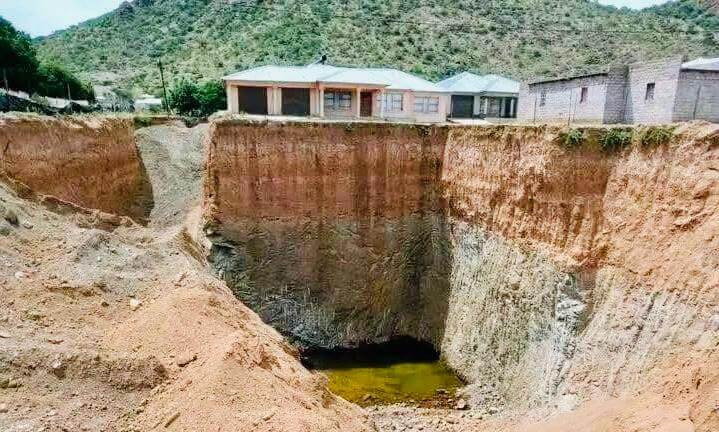
In December 2025, South Africans watched live broadcasts as police convoys descended on Bapong, a village in the North West province. Illegal miners known as zama zamas have dug beneath and around homes, leaving walls cracked, floors tilted and families fearful that the land could collapse beneath them.
South African Police Service National Commissioner General Fannie Masemola vowed to end the scourge, yet the struggle in Bapong is only one chapter in a much larger African story.
That story stretches across the continent. In Ghana, galamsey operations involve up to three million people and contribute nearly 30 per cent of the country’s gold output, but rivers once central to farming and drinking water are now poisoned.
Nigeria loses an estimated nine billion US dollars each year to illegal mining and smuggling, draining wealth that could build schools and hospitals. Zimbabwe’s illicit flows strip billions from its economy, while communities in Mutoko watch granite hills vanish and lithium pits expand without tangible benefits to the ordinary people. Morocco too, carries scars of extraction.
In Jerada, men descend daily into abandoned coal shafts, gambling with their lives for fragments of survival. Along the coasts, beaches shrink as ten million cubic metres of sand are stripped away each year, half of it illegally, leaving shorelines eroded and tourism under threat. These examples show that Bapong’s plight is not isolated but mirrored across Africa.
The common thread is custodianship under siege. Traditional leaders are often blamed for collusion, yet they navigate impossible terrain: global demand for minerals, local poverty, and political expediency. Their authority is rooted not in statutes but in ancestral memory, binding them to the land, rivers, and graves of their people.
When that authority is undermined, communities lose not only protection but identity. As Karl Marx observed, “the ownership of land is the foundation of all social relations.” Africa’s custodianship is therefore not symbolic but structural, shaping the destiny of the people who live upon it.
The crisis is not new. Frantz Fanon warned that colonialism was not only about political domination but about the seizure of land and resources, the heartbeat of a people’s existence. Today’s illegal mining is a continuation of that dispossession, stripping Africa’s land of meaning and reducing it to raw material for outsiders’ profit.
The economic consequences are devastating. Walter Rodney showed how Africa was systematically underdeveloped by the extraction of its wealth, leaving communities impoverished while outsiders grew rich. His analysis echoes in Nigeria’s lost billions and Zimbabwe’s vanishing granite hills, where illicit flows drain national development and deepen poverty.
Solutions must be rooted in Africa’s own systems. Advocate Zwelethu Madasa of South Africa insists that “traditional leadership needs to educate and communicate the fact that indigenous governance is an alternative system of inclusivity in decision-making.”
His words highlight that custodianship is not simply defensive but offers Africa a governance model capable of guiding communities through modern crises with inclusivity and accountability.
Ambassador Ireneo Omositson Namboka extends this vision, affirming that “royalty or hereditary leadership is a plausible resort the continent can turn to for regaining political sobriety, cultural self‑respect and economic development.”
His perspective reinforces the idea that traditional leadership is not ceremonial nostalgia but a viable path to stability and dignity. Recognising this, the African Indigenous Governance Council under His Majesty Dr Robinson Tanyi has envisioned a continental body of traditional leaders to meet the challenge.
Such a body would educate chiefs on environmental law, empower them with legal and technical expertise, and give them the authority to scrutinise mining contracts before a single shovel hits the land.
It would monitor mining activities across borders, expose illegal operations before they destroy communities, and liaise with governments to ensure that ancestral custodianship is not drowned out by corporate interests. Most importantly, it would hold councils accountable through peer review and ethical oversight, restoring trust between leaders and the people they serve.
The vision is powerful because it connects local struggles to continental solidarity. Imagine a chief in Mutoko, Zimbabwe, no longer isolated but backed by a council that can challenge exploitative deals. Imagine custodians in Ghana standing together with their counterparts in Nigeria and Morocco, united in defending rivers, forests and ancestral graves.
Imagine villagers in Bapong knowing that their leaders are not alone, but part of a continental movement that places dignity above profit. Each local fight becomes part of a larger Pan‑African resistance.
Illegal mining is tearing at the fabric of Africa right now. The scars on Bapong’s land, the desperation in Jerada’s tunnels, the erosion of Morocco’s beaches, the poisoned rivers of Ghana, and the scarred hills of Zimbabwe all remind us that custodianship cannot remain vulnerable and local. It must become continental and unshakeable.
Africa’s destiny rests on the strength of its custodians. If traditional leaders unite across borders, they can reclaim authority over land, restore cultural self‑respect and secure economic development for generations.
The creation of a united body of traditional leaders, as envisioned by the African Indigenous Governance Council, is not just an idea. It is the path to sovereignty, dignity, and renewal. Africa’s story will not be written by miners or syndicates. It will be written by custodians who rise to defend the land and by the unity of a continent determined to protect its people and its future.
Author
His Excellency Ambassador Godfrey Madanhire is a prominent Pan-Africanist, diplomat, broadcaster, and entrepreneur known for his role as a Roving Ambassador for the State of the African Diaspora (SOAD) and COO of Radio 54 African Panorama.
He advocates for African unity, cultural empowerment, and positive development through media like his “African Passport” show. He’s an influential voice in diaspora engagement, often writing articles and speaking on restoring African governance and promoting African talents.