Ghana’s 1st visually impaired law lecturer, Tetteh, tells his story
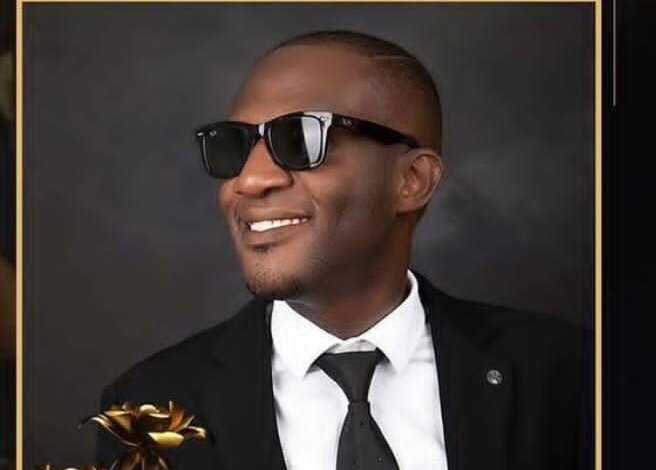
I am Carruthers Tetteh, a purpose-driven young man, and for more than two decades, I have lived in a world where the lights went out. Today, when I stand before a lecture hall at the University of Cape Coast (UCC), I am often introduced as a “success story”, the first visually impaired lecturer at this prestigious institution, a practicing lawyer, and a champion for the less privileged.
Yet behind the titles and first-class honours lies a daily reality far more taxing than a graduation ceremony. While I am proud of my journey, I want to pull back the curtain on the ongoing challenges that remain, which include the hurdles of mobility, the constant need for updated assistive technology, and the reality that my success is often sustained through exhausting multitasking that the world rarely sees.
My story truly began in 2002. I was an eleven-year-old boy in Class Five, preoccupied with examinations, when a simple headache changed everything. My mother took me to a private clinic in Winneba, where I was given injections.
What followed was a terrifying reaction; itchiness that felt like chickenpox and was later diagnosed as Stevens-Johnson syndrome. This rare skin and membrane disorder ravaged my body and at its most severe stage, led to total visual impairment.
When I was finally discharged, the life I knew, the colours of my classroom and the faces of my family had vanished. As I transitioned from Akropong School for the Blind to mainstream education at Okuapeman Senior High School and later to UCC, I realised the education system was not designed for me.
My mindset shifted; I became obsessed with academic excellence, driven by a haunting fear of becoming a “blind beggar on the streets.” Through discipline and consistency, I earned first-class honors in English and History, and later another first-class degree in Law.
However, academic brilliance does not erase technological barriers. During my time on the Student Representative Council (SRC) at UCC, I advocated fiercely for laptops for students with disabilities.
Today, as a lecturer in Criminal Law and the Ghana Legal System, my need for high-end assistive devices is even more acute. Despite being a lecturer, I still rely on what I call the “audio method.” I provide slides to my students, but I must appoint a student to read them aloud before I can explain the complexities of the law.
It is a functional workaround, but it highlights a significant gap. In the digital age, I still lack seamless, high-tech tools that would give me the same independence as my sighted colleagues. My success should not be mistaken for contentment with the status quo; the need for advanced assistive technology remains urgent.
The weight of being “first”
Beyond the classroom, the physical world is fraught with obstacles. Navigating a university campus or a courtroom as a visually impaired person in Ghana is a daily negotiation with a society that lacks inclusive infrastructure.
Family remains my first point of assistance; my “assistive system,” providing the psychological and emotional scaffolding I need to navigate a physically and socially challenging world. Yet relying on family and friends is a double-edged sword.
Their support is my bedrock, but it also shows the lack of institutionalised systems for persons with disabilities (PWDs). Whether moving between my law practice, where I specialise in Alternative Dispute Resolution (ADR) or fulfilling my duties as a youth president at my church, mobility is never simple.
It requires constant planning and assistance. There is a unique pressure in being the first visually impaired student in the Faculty of Law and now the first visually impaired lecturer. I gave my all to set a high standard, but “giving it my all” meant an intense level of multitasking and mental labour that my peers did not have to endure.
When I failed my first attempt at the Ghana School of Law entrance exams in 2019, I felt not only personal disappointment but also the weight of expectations placed on me as a representative of all PWDs.
I eventually succeeded in 2020 and was called to the Bar in 2022, but that year of interning and waiting reminded me how fragile the path to success can be without robust support systems.
I share my story not only to motivate but also to advocate. I serve on boards such as the Naa oo Naa Foundation and Hope for Future Generation to champion the rights of the less privileged. However, advocacy must be matched with action.
My journey from that clinic in 2002 to the lecture hall in 2023 is a testament to resilience, but resilience should not be a substitute for assistance. We need a society where a visually impaired lawyer or lecturer does not have to rely solely on the “audio method” or the kindness of family to navigate the world.
We need technological, architectural, and social systems that treat inclusion as a right, not a favor. My vision for the future is clear, but I still need the world to meet me halfway.
Edited by Oral Ofori

Oral Ofori is Founder and Publisher at www.TheAfricanDream.net, a digital storyteller and producer, and also an information and research consultant.