Pope Leo XIV completes historic first visit to Africa
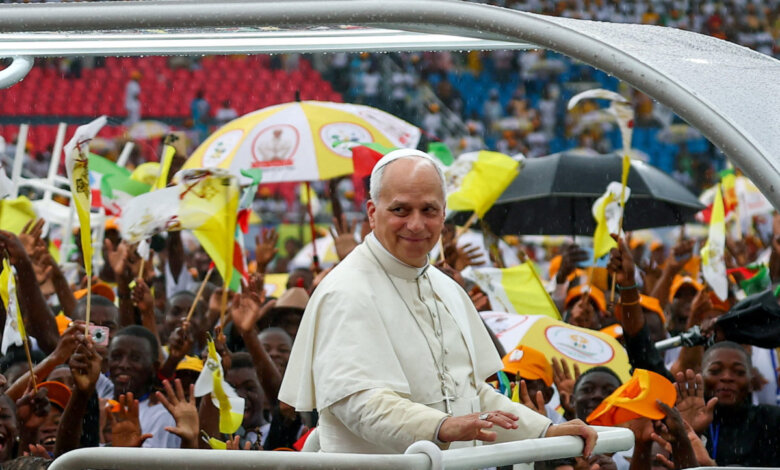
History’s first American pope, Pope Leo XIV has completed a landmark visit to Africa. The trip, one of the most ambitious apostolic journeys in recent papal history, spanning four nations, 11 days, 11 cities, 18 flights, and more than 11,000 miles, left an indelible mark on the African continent.
The trip was Pope Leo’s third journey outside Italy and his first to Africa since his election in May 2025. Across Algeria, Cameroon, Angola and Equatorial Guinea, he met presidents and prisoners, orphans and university students, Muslims and Catholics, the sick and the grieving.
He spoke of peace in a country torn by conflict, challenged leaders to confront corruption, and prayed at one of Africa’s most sacred Marian shrines. Throughout it all, he carried with him a message that was both personal and pastoral.
Algeria
Pope Leo’s tour was the 24th by a pope to Africa since the late 1960s, but Algeria had never been on any of those itineraries. With 99% of its population Sunni Muslim and only around 8,000 Catholics, Algeria is not obvious papal territory.
But for the Pope, the pull was irresistible. As a member of the Augustinian Order, he was visiting the homeland of Saint Augustine, Bishop of Hippo, the spiritual father whose teachings have shaped his entire vocation.
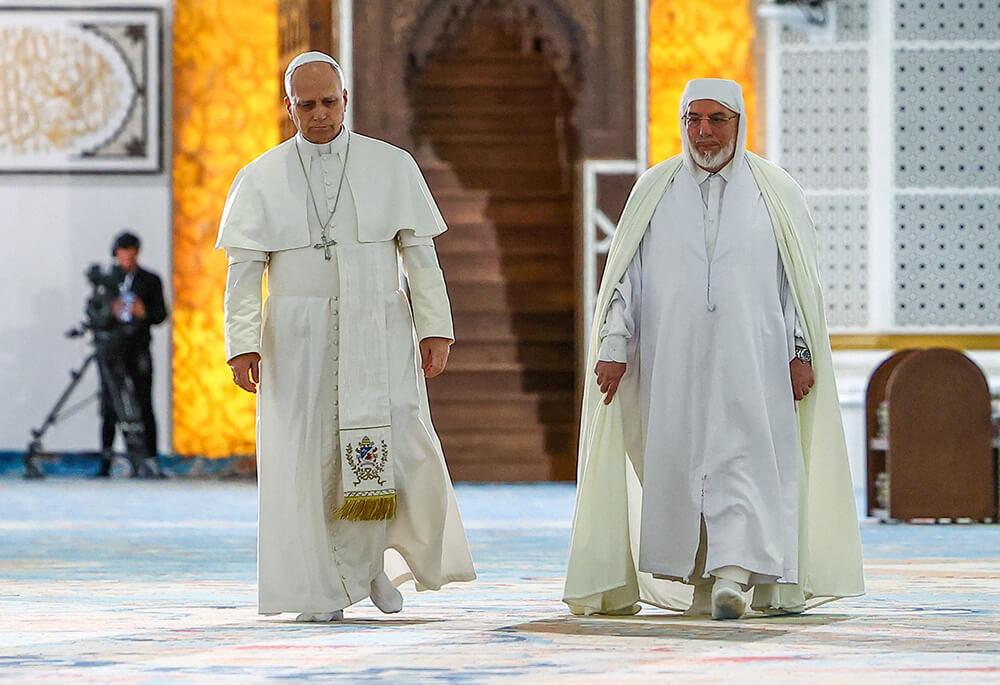
He also made a point of visiting the Great Mosque of Algiers, one of the world’s largest, with the tallest minaret on earth at around 265 metres, in a deliberate act of interfaith outreach.
When questioned about the visit, he was direct. “Although we have different beliefs, different ways of worshipping, different ways of living, we can still live together in peace,” he told reporters.
Cameroon
Cameroon brought the trip’s most politically charged moments. The country’s 93-year-old president, Paul Biya, has ruled since 1982 in what many observers consider an increasingly authoritarian manner. The did not shy away from uncomfortable truths.
Travelling to Bamenda, the epicentre of a nearly decade-long separatist conflict, he begged for peace and denounced those he called the “handful of tyrants” ravaging the earth, remarks that made global headlines and required clarification days later.
The pastoral side of the Cameroon visit was equally powerful. He visited the Ngul Zamba Orphanage, met privately with Cameroonian bishops, and celebrated Mass at the Japoma Stadium in Douala before an enormous crowd. A local bishop described the visit as a potential turning point for the conflict-scarred country.
Angola
No stop on the trip carried more personal weight than Angola. Research published last year revealed that Pope Leo has ancestors on both sides of the transatlantic slave trade, both enslaved people and slave owners. He did not address this directly, but the significance of his presence in a country that was once a major hub of that trade was unmistakable.
At the Marian shrine of Mama Muxima, built by the Portuguese in the 17th century on a hill overlooking the Kwanza River and today Angola’s most beloved pilgrimage site, Pope Leo prayed the rosary before a crowd that fell silent, then erupted into applause when he addressed them in Kimbundu.
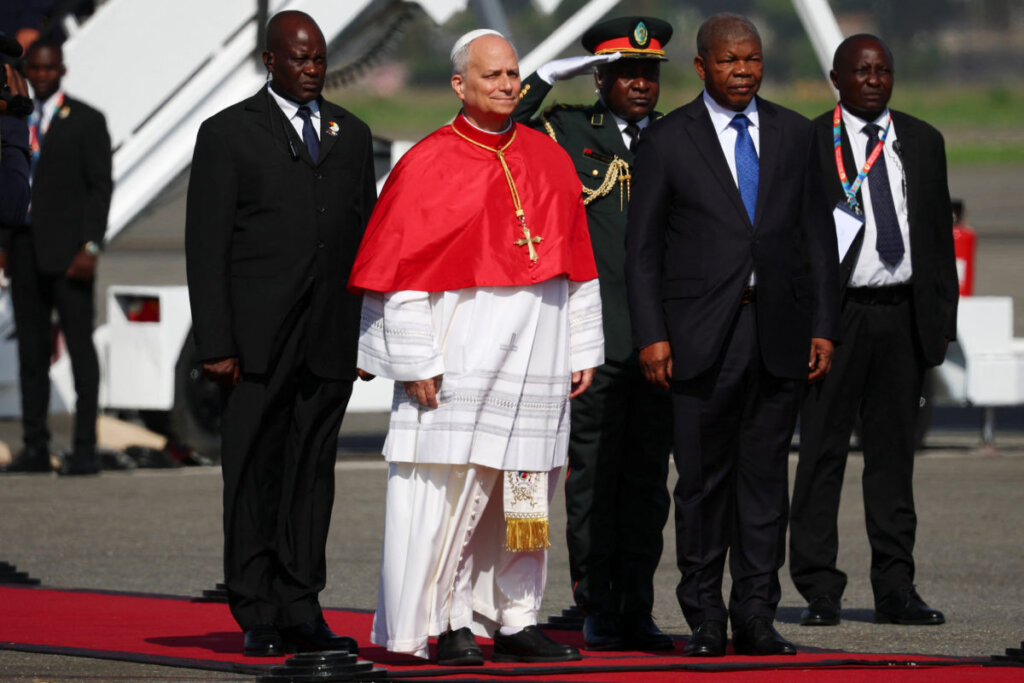
It was an unscripted moment of connection that captured something essential about this pope and this journey. Meeting with President João Lourenço, Pope Leo challenged Angola’s leaders to break the “cycle of interests” that has exploited Africa and its people for centuries. His words resonated across a continent well acquainted with that cycle.
Equatorial Guinea
Pope Leo arrived in Equatorial Guinea on April 21, the first anniversary of Pope Francis’ death, becoming only the second pope to visit the small, predominantly Catholic nation since John Paul II in 1982.
The visit produced some of the journey’s most human moments. At a psychiatric hospital, Leo abandoned the official programme to move through the wards greeting patients individually, pausing for photographs and quiet conversation.
At Bata prison, he told more than 600 inmates that no one is excluded from God’s love, and that even behind bars, change, reconciliation and hope remain possible. When the heavens opened and drenched the courtyard during his visit, neither the pope nor the inmates moved.
The final Mass of the trip drew around 30,000 faithfuls to Malabo Stadium, where music, dancing and vivid colour filled the air in a celebration that felt like both a farewell and a promise.
Africa contributed more than half of the 15.8 million new Catholics baptised globally in 2023; some 8.3 million new African Catholics in a single year.
It is a continent that was long considered a mission field but has become one of the Catholic Church’s most dynamic centres of growth, sending its own priests and nuns to minister in Europe and beyond.
Written by Oral Ofori