Fela Kuti receives Africa’s first Grammy Lifetime Achievement Award

The Recording Academy has posthumously honoured Nigerian music legend Fela Anikulapo Kuti with a Lifetime Achievement Award, cementing his place in global music history more than two decades after his death.
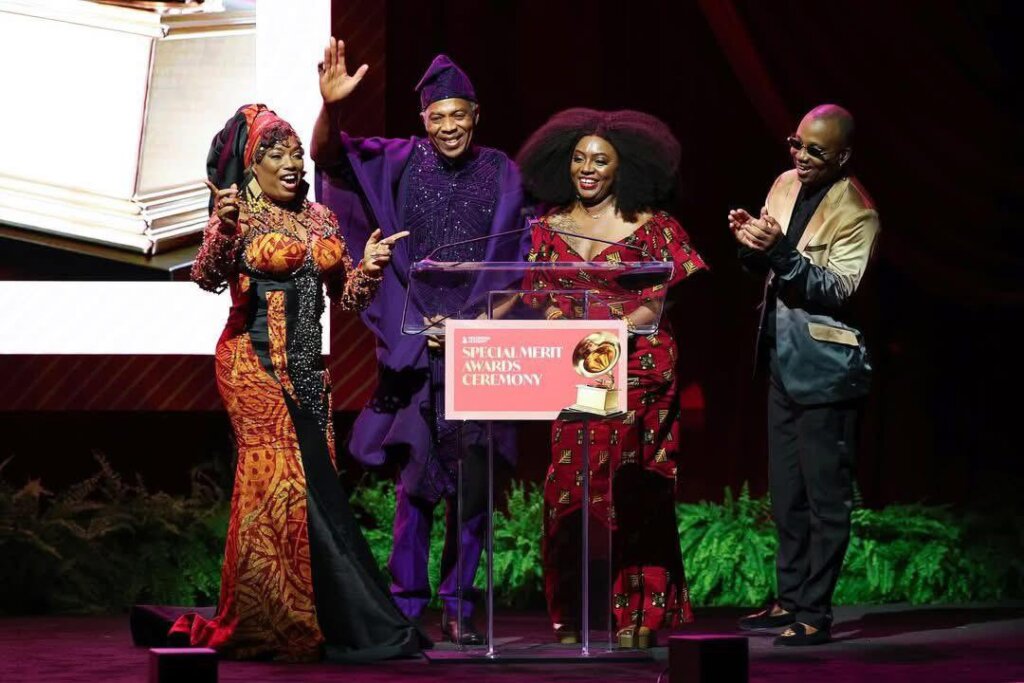
The award was presented at a special ceremony in Los Angeles on Saturday, January 31, 2026, ahead of the 68th Annual Grammy Awards. The award was received by the members of the Kuti family.
With the recognition, Fela becomes the first African to receive the Recording Academy’s Lifetime Achievement Award; one of the institution’s highest honours, reserved for artists whose work has made enduring contributions to the recording arts.
The Academy described him as “an architect of Afrobeat,” praising a body of work that continues to influence musicians across continents. He was the only Nigerian and African among this year’s honourees.
Other recipients of the 2026 Special Merit Awards include Whitney Houston, Cher, Chaka Khan, Carlos Santana, Paul Simon, Bernie Taupin, Eddie Palmieri, Sylvia Rhone and John Chowning.
Although his music reshaped African and global soundscapes, Fela never won a Grammy during his lifetime. He died in August 1997 at the age of 58.
His posthumous recognition is widely viewed as a long-overdue acknowledgement of Afrobeat’s roots and Nigeria’s contribution to world music, particularly as Afrobeats continues to dominate international charts. Born Olufela Olusegun Oludotun Ransome-Kuti on October 15, 1938, Fela was a Nigerian musician, bandleader, composer and outspoken activist.
He is recognised as the pioneer and father of Afrobeat, a genre he developed in the late 1960s by blending jazz, funk, highlife and traditional African rhythms with sharp political commentary. To ensure his message reached ordinary people across social classes, he often sang in pidgin English.
His catalogue includes influential works such as Zombie, Water No Get Enemy, Sorrow, Tears and Blood, Shakara, Expensive Shit and Coffin for Head of State. Through these songs, Fela openly criticised corruption, military rule, police brutality and the exploitation of African societies.
Fela’s influence extended far beyond Nigeria. Global artists including Beyoncé, Paul McCartney and Thom Yorke have cited him as a major inspiration. While modern Afrobeats has evolved sonically, many musicians continue to trace its cultural and ideological foundation back to Fela’s work.
More than a musician, Fela was a fearless political dissenter who used music as a form of resistance. During Nigeria’s era of military rule, he directly challenged those in power, often naming leaders and institutions in his lyrics, a defiance that came at great personal cost.
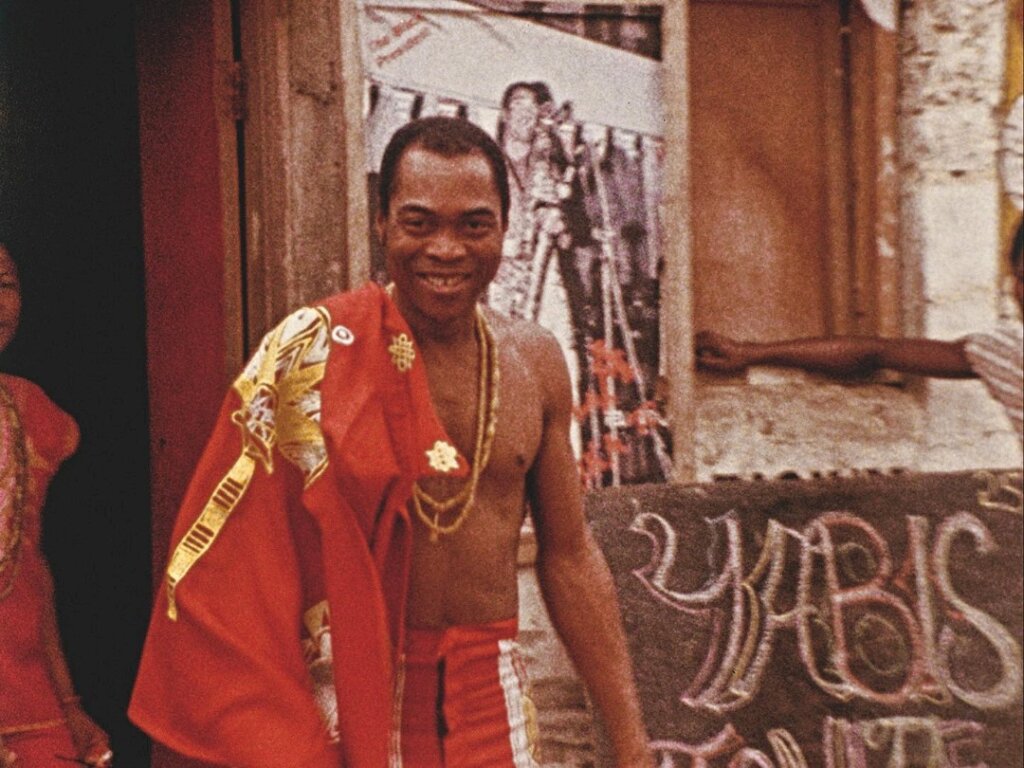
In 1977, the military government raided his communal residence, the Kalakuta Republic, destroying the building and assaulting residents. During the attack, his mother, Funmilayo Ransome-Kuti, a prominent nationalist and women’s rights activist, was thrown from a window and later died from complications linked to her injuries.
Fela responded through music, releasing Coffin for Head of State, which accused the military leadership of responsibility for her death. His confrontations with the state continued.
In 1984, under the military government of Muhammadu Buhari, Fela was sentenced to five years in prison on currency-related charges widely regarded as politically motivated.
He served about 20 months before being released in 1986 by the Ibrahim Babangida administration. Despite repeated arrests, harassment and violence, Fela remained defiant, continuing to perform, record and speak out until his death.
His Grammy Lifetime Achievement Award now stands as global recognition of an artist whose music was as revolutionary as it was fearless.
Written by Kweku Sampson