Ghana–South Korea relations poised for growth, envoy says
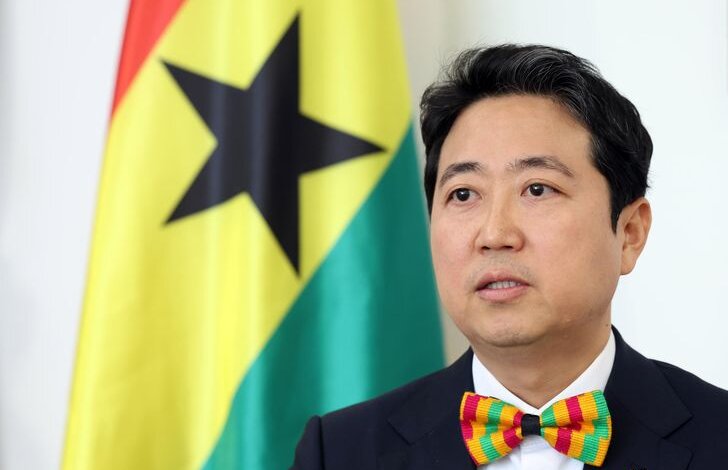
As Ghana and South Korea approach the 50th anniversary of diplomatic relations in 2027, Kojo Choi, Ghana’s Ambassador to Seoul, South Korea, says the two nations are uniquely positioned to deepen cooperation, drawing on shared cultural values and complementary economic strengths.
Kojo Choi, who assumed office in October, believes Ghana can become a strategic partner for South Korea at a time when global supply chains are increasingly unstable and competition among emerging economies is intensifying. He is the first Ghanaian Ambassador of an African nationality with Korean heritage.
“South Korea achieved remarkable growth through exports, but today it is becoming harder to find new engines of growth,” Choi said in an interview with Yonhap News Agency. “This is the moment to think beyond traditional models and explore new partnerships.”
According to Choi, Ghana offers such an opportunity. The West African nation is rich in critical minerals including lithium, nickel, and manganese which are key inputs for electric vehicle batteries. Ghana has also identified the EV sector as a strategic growth industry.
With South Korea among the world’s leading EV and battery manufacturers, the ambassador described the partnership as a natural alignment. He pointed to Hyundai Motor’s assembly plant in Ghana as an early example of cooperation that could be expanded across both upstream and downstream segments of the battery value chain.
Beyond resources, Ghana’s geographic position gives it added significance. Like several African countries, it serves as a logistics bridge to both Europe and the United States, creating efficiencies for export-driven economies such as South Korea.
Choi noted that eligible sub-Saharan African nations are currently engaging the U.S. on restoring duty-free access to the American market following its suspension under former President Donald Trump’s tariff policies.
“If this framework is effectively utilized, it can connect Ghana, Africa, Europe, and the U.S. into a single market expansion strategy,” he said, adding that Ghana is prepared to play a leading role in Africa’s economic integration.
Cultural affinity, Choi said, provides a strong foundation for this growing partnership. He highlighted similarities between the two societies, particularly their emphasis on family, community and national identity.
“Just as South Koreans place great importance on ethnic and cultural identity, Ghanaians hold their national identity with the same depth,” he said.“Family and community sit at the centre of life in both countries.”
Born in South Korea and later naturalized as a Ghanaian citizen, Choi moved to Ghana in 1992 with his missionary parents; a formative experience that shaped his deep connection to the country he now represents.
That connection, however, did not shield his ambassadorial appointment from controversy. Despite building a successful business career in Ghana, which he often refers to as his “second homeland”, his nomination initially sparked public debate.
“I never expected my appointment to become such a heated national issue,” Choi said. “It weighed heavily on me.” He said public opinion shifted as people learned more about his personal journey, missionary background and years of service in Ghana, rather than through political or diplomatic explanations.
Serving as Ghana’s ambassador in the country of his birth is among the most meaningful roles of his life, Choi said, noting that his understanding of Africa is central to who he is.
Choi said he is exploring commemorative initiatives with Seoul ahead of the 2027 milestone, including the possibility of co-hosting cultural events such as a K-pop performance in Ghana.
He also expressed hope for early high-level diplomatic exchanges, including reciprocal state visits by South Korean President Lee Jae Myung and Ghanaian President John Mahama.
“When my tenure ends, I hope to be remembered as an ambassador who served Ghana with sincerity and impact,” he said. “My greatest ambition is to see the country where I was born and the country that raised me stand together as close friends and enduring partners.”
Written by Kweku Sampson