9th Pan-African Congress in Lomé pushes for fairer world order
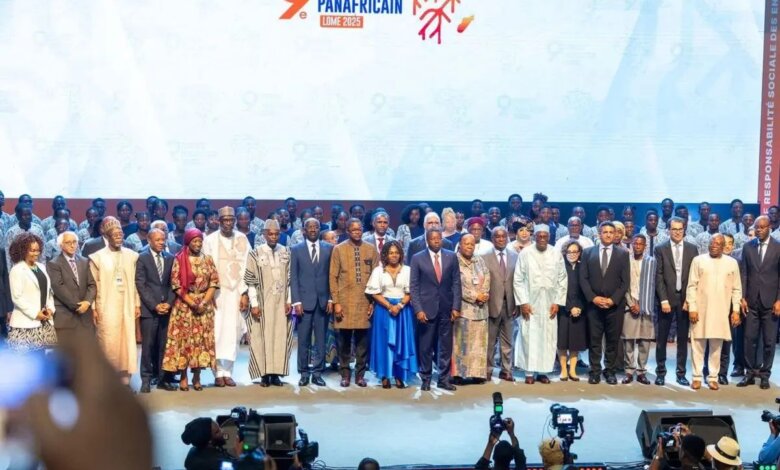
The 9th Pan-African Congress in Lomé, Togo, concluded with a strong call for Africa to reposition itself at the centre of global decision-making, urging unity, solidarity and a renewed Pan-African vision as the foundation for a fairer world order.
In a statement delivered on his behalf, Togo’s President and head of the Executive Council, Faure Gnassingbé, said the five-day Congress held from December 8 to 12, 2025 enabled participants to chart the outlines of a new Africa.
He said delegates were leaving Lomé with a clear sense of direction for a reinvented continent that is proud, respected, and determined to act collectively.
Gnassingbé attributed the success of the Congress to the unity, courage, and determination displayed by participants, describing the outcomes as the building blocks of an Africa that affirms itself, inspires others and delivers results.
He added that the vision of Africa long imagined is no longer distant, but actively taking shape as the continent moves toward becoming a major geopolitical force and a respected cultural hub.
Delegates at the Congress adopted a declaration calling for a more just, balanced and representative international system grounded in respect for sovereignty, social justice, equity, peace and shared prosperity.
The document emphasized that Africa can no longer afford to remain a passive observer on the global stage, warning that division weakens the continent, while unity strengthens it.
The declaration further stressed that Africa’s ability to confront the challenges of the 21st century depends on meaningful engagement with people of African descent worldwide.
It described the global African diaspora as essential to struggles for justice, sovereignty, people-centred development and the transformation of international institutions.
To advance these goals, the Congress called for the formation of a united Pan-African front bringing together the African Union, the Caribbean Community, the Community of Latin American and Caribbean States, alongside representatives of peoples from across the world.
Speaking at the closing session, African Union representative Amr Aljowaily referenced the seventh African Union–European Union Summit held in Rwanda last month, noting that it marked a historic moment.
For the first time, he said, Europe formally acknowledged with profound regret the suffering endured by Africans from the transatlantic slave trade through colonialism and apartheid. He described the recognition as a critical foundation for future engagement, adding that the Lomé Congress provided additional ideas and momentum to build upon it.
The Congress also called on Africans and their descendants to actively promote African identity and establish funding mechanisms to strengthen inclusion and solidarity between the continent and its diaspora, including Afro-descendant communities.
Gnassingbé described this as a challenge that demands consistency and coherence in both individual and collective action.
In addition, participants outlined broad directions on reparations and the restitution of cultural property, while reflecting on the place and role of African and Afro-descendant women. They recognized them as hardworking, courageous, and resilient contributors to the continent’s past, present, and future.
Written by Oral Ofori